Saltwater Fishing
Pier Fishing in California — Concourse d’Pier Carts
Almost every pier rat that I know, or at least those who frequent the long piers in central and southern California, has a pier cart. It’s needed when you’re loaded down with rods and reels, tackle box, bait bucket, cooler, hoop net, magic potents, good luck charms, and your personal copy of Pier Fishing in California (that seems to weigh several pounds itself). Of course you also need something to help you carry off that 30-pound fish that you’re going to take home for dinner. Some are simple (i.e, old grocery carts), some are commercially available models found at most hardware stores, some are elaborate home-made contraptions containing all sorts of personal innovations. However, simple or complex, inexpensive or expensive, they must do the same thing: provide a platform by which to haul that sometimes fairly heavy equipment out to the end of the pier. And, they must be sturdy enough to be hauled up and down stairs as well as over rough-hewn planks. In addition, they must be able to survive the vicissitudes of car trunk and pick-up truck travel. They’re a MUST HAVE piece of equipment.
One day we had a thread on Pier Fishing in California about pier carts and someone sent in the following title (which I’ve changed for this article). We also received a plethora of pictures of people’s favorite carts.


 These first two pictures are of my pier cart (minus the rod holders) and I’ve used this one or similar ones since the ’80s
 KJ Pier Cart 2016 at Citizens Dock in Crescent City
 Art and his pier cart — Newport Pier
 Crabman’s pier cart — Newport Pier
 Matty and Gordo Grande — Hermosa Beach Pier

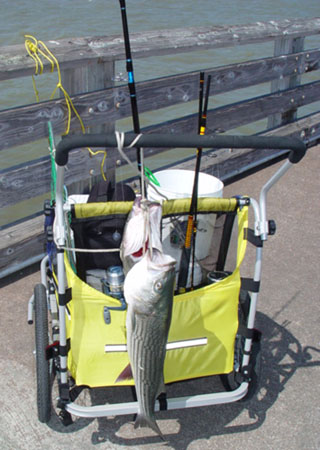 Rockhoppers pier cart — Berkeley Pier
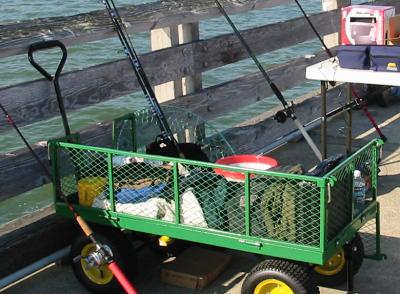 Gyzodude’s “green monster” cart —Berkeley Pier
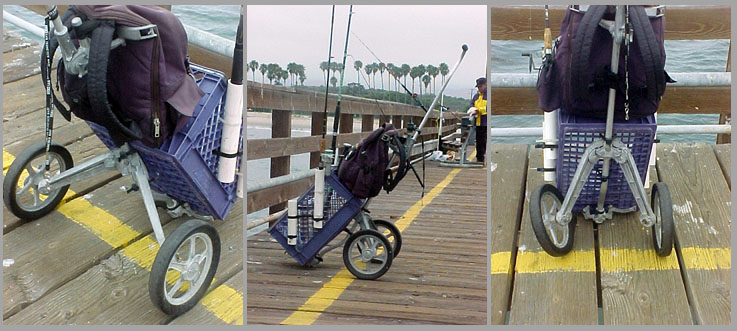 Kim’s pier cart — Goleta Pier
 Dumbarton Dave’s pier cart — Dumbarton Pier
 Jason’s pier cart
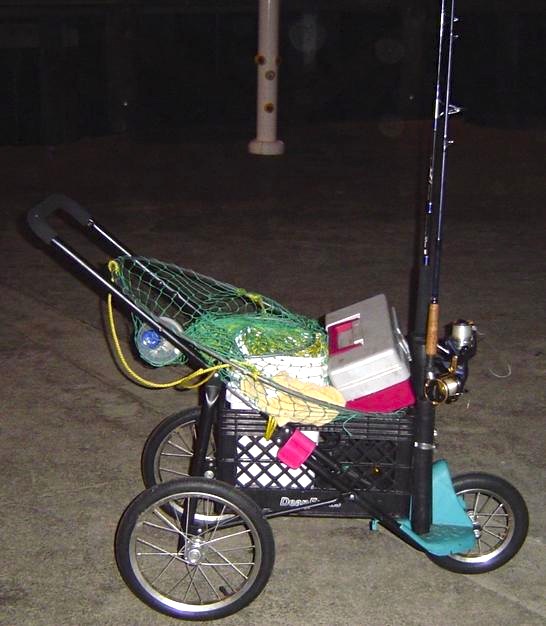 DompfaBen’s pier cart
 Pier cart at Malibu Pier, 2007
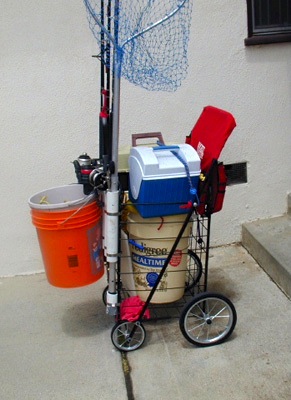 Gordo’s pier cart
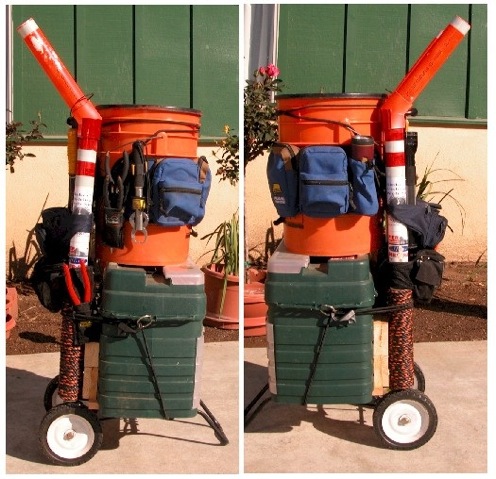 Unknown pier cart
 BigdaddyO57′s pier cart
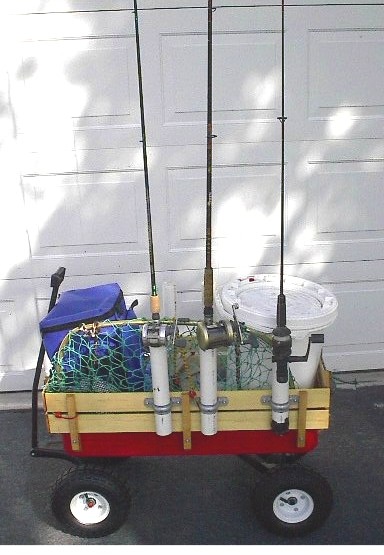 Jimbojack’s Cart
 Riorust’s pier cart
 ReelHabit’s pier cart
 Sinker’s small pier cart
 Mark and the “Magic Pier Cart” — Oceanside Pier

Pier cart at the Huntington Beach Pier in 2015
 Pier cart at Manhattan Beach Pier in 2006
 Pier Cart at the Balboa Pier
 Pier Cart at the Port Hueneme Pier
The Catalina “Get Togethers” & a few designs over the years —
For over a decade the “pier rats” from Pier Fishing In California (pierfishing.com) and United Pier and Shore Anglers of California (UPSAC) got together at Avalon on Catalina Island, caught a few fish, and had a chance to see their friends once again. Every year there was a design for the t-shirts and often there was a contest. Here are some of the designs over the years.
 This was the official 2002 winner!
 This design was a runner-up in 2003
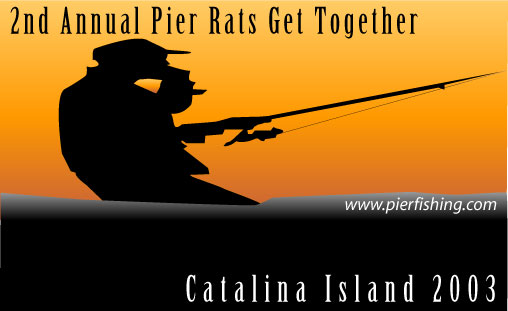 The winner in 2003
 2004 winning entry — a small copy
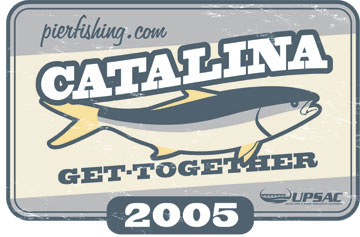 The winning entry in 2005

The winner in 2006
 This one wasn’t selected in 2007. Some felt it was in bad taste, some thought it was great.
 This was the winning 2007 entry

We had two winners in 2008, a men’s and women’s version

 The 2009 winner
 The 2010 winner (front)
 The 2010 winner (back)
 The 2011 Winner

The 2012 winner
 The 2013 Winner.
California’s SoCal Bass — #3 — Spotted Sand Bass aka Bay Bass
Sea Basses—Family Serranidae

Spotted sand bass from the Coronado Ferry Landing Pier in 2004
Species: Paralabrax maculatofasciatus (Steindachner, 1868); from the Greek words para (near) and labrax (a European bass), and the Latin words maculato (spotted) and fasciatus (banded).
Alternate Names: Commonly called bay bass, spotted bay bass, spotted bass, rock bass, red spotted rock bass, spotted, spotty, spotted cabrilla, pinta cabrilla. Also grumpy (large fish), Johnny verde, sand bass and one I don’t understand—nuked fish (San Diego Bay bass). In Mexico it’s called cabrilla de roca.
Identification: Bass-shaped with a dorsal fin similar to that of barred sand bass. Identified by the numerous reddish-brown or black spots that cover the body and fins.
 Spotted Sand Bass from Coronado Ferry Landing Pier in 2002
Size: Length is to 23 inches and weight to 7 pounds. Most caught off piers are less than 12 inches. The California record weighed 6 lb 12 oz and was taken at Newport Bay in 1994.
Range: Mazatlan, Mexico and the Gulf of California to Monterey; uncommon north of Cayucos. Very common in Newport Bay, Mission Bay, and San Diego Bay. (Reported from San Francisco Bay in the late 1800s.)
Habitat: Typically found in shallow (2 to 30 feet), warm-water areas in bays and harbors as well as protected inshore environments along the coast. Most commonly found where there is some form of structure—eelgrass, surfgrass or rocks.
 Spotted sand bass from the Coronado Ferry Landing Pier in 2004
Piers: Generally caught from piers in bays but seen at almost all southern California piers. Best bets: Coronado Ferry Landing Pier, Embarcadero Marina Park Pier, Shelter Island Pier, Oceanside Harbor Pier, Dana Harbor Pier, Belmont Veterans Memorial Pier, Cabrillo Pier and Redondo Sportfishing Pier. Primarily caught March to November.
Shoreline: One of the main catches for shore anglers fishing in bays in southern California.
Boats: One of the main species for boaters fishing in southern California bays.
 Brian and a spotted sand bass from a pier in Newport Harbor in 2006
Bait and Tackle: Adult spotties are opportunistic feeders grabbing whatever seems to look like food. Although they primarily eat crabs and clams, especially jackknife (aka razorback) clams and littleneck clams, they also will snack on ghost shrimp, shrimp, snails, algae, brittle stars and small fish. Since crabs and clams are their main food, both are considered good bait. Other good baits, all fished on the bottom, include ghost shrimp, bloodworms, fresh mussels, other types of clams, and live small fish—anchovies and topsmelt. Tackle should be light with hooks size 6 or 4. They’ll often hit artificial lures like swim baits, grubs and even feathers.
 DompfaBen and a spotted sand bass from a pier in Newport Harbor in 2006
Food Value: If you are lucky enough to land a keeper-size fish you will have a good meal. Spotted sand bass have a mild-flavored meat suitable to almost any kind of cooking. They can be used as fillets, baked whole, or cut into smaller pieces for deep-frying.
 A spotted sand bass from the Coronado Ferry Landing Pier in 2004
Comments: In the “don’t know why category.” it’s reported that spotted bass in the Anaheim and Newport Bays reach the legal 12-inch size in 2-3 years. However, the spotties typically can take up to 8 years to reach legal size in San Diego Bay. Fish from Marina del Rey are also fast growin’ while those from Long Beach Harbor and the Catalina Harbor are somewhat in the midpoint in growth rate. Overall, the average southern California spotty is of legal size by 3 years excepting those poor fish down in San Diego Bay. Of course that does give the “Diego clan” a few more years to enjoy the fun of being caught and returned (we hope) to the water by SoCal anglers.
 A spotted sand bass from the Shelter island Pier in 2009
 Another spotted sand bass from the Shelter Island Pier in 2009
 Spotted Sand Bass from the Coronado Ferry Landing Pier in 2007

Spotted Sand Bass taken by Arvin at the Coronado Ferry Landing Pier in 2002
 Spotted sand bass taken at Carlsbad

Spotted sand bass taken by calaznfisher in 2011
California’s SoCal Bass — #2 —Barred Sand Bass
Sea Basses—Family Serranidae

Sand bass from the Dana Harbor Pier in 2013
Species: Paralabrax nebulifer (Girard, 1854); from the Greek words para (near) and labrax (a European bass), and the Latin words nebul (smoke or dark) and fer (to bear), in reference to the color on their sides.
Alternate Names: Commonly called sand bass; sandy, grumps or grumpy (large fish), ground bass, rock bass, sugar bass or Johnny Verde bass. Also given the unflattering names of pussgut and turd roller. In Mexico it’s called cabrilla de arena.
 Sand bass from the Oceanside Pier in 2013
Identification: Easily differentiated from kelp bass by the coloring and the shape of the dorsal fin. The dorsal fin is long and continuous, with a notch between the spiny and soft ray portions but not as deep as on kelp bass; the third spine of the dorsal fin is much longer than the fourth and twice as long as the second. The color is generally dark gray to greenish on the back, with faint bars on the sides, and a whitish-colored belly. There are usually small golden-brown spots on the cheeks. A 10-inch albino sand bass was landed in July of 1965 from the Sportfishing boat Palomar while fishing 8 miles northwest of Oceanside, and one mile offshore from the San Onofre power plant. A similar-colored, 12-inch albino sand bass was reportedly caught just two weeks earlier by the sportfishing boat Sea Lure. It was caught approximately a quarter mile away. The first fish is now a resident of the Los Angeles County Museum of Natural History; the second fish was not saved.
 Sand bass from the San Clemente Pier in 2015
Size: Length to 25.6 inches and weight to 14 pounds. Most caught off piers are less than 12 inches long (although a 12-pound fish was reported from the Shelter Island Pier in February of 1997). The California record weighed 13 lb 3 oz and was taken at the Huntington Flats in 1988.
 Range: Bahia Magdalena, southern Baja California to Santa Cruz. Commonly found south of Point Conception.
Habitat: Usually found around sandy areas near kelp or around rocks near the bottom. Concentrated 15-85 feet deep.
Piers: Best bets: Ferry Landing Pier, Embarcadero Marina Park Pier, Shelter Island Pier, Imperial Beach Pier, Oceanside Harbor Pier, Dana Harbor Pier, San Clemente Pier, Seal Beach Pier, Belmont Pier, Long Beach Finger Piers, and Hermosa Beach Pier.
A sand bass from the Dana Harbor Pier in 2010
 Tom and Krista with a barred sand bass from the San Clemente Pier in 2005
Shoreline: A common catch for shore anglers in southern California.
 A large sand bass from the Redondo Sportfishing Pier in 2012
Boats: One of the main species for boaters in southern California, especially during spring spawning times.
 KJ and a small sand bass from the Ocean Beach Pier in San Diego in 2015
Bait and Tackle: Another opportunistic feeder grabbing just about anything that moves. The smaller fish that hang around piers (under 12 inches) focus in on mysids (tiny shrimp-imitating critters), crabs, worms, clams, and small fishes. All in all it’s probably a healthir diet than that experienced by young pier anglers—corn dogs, French fries, and soda pop. Adult sandies, much like adult humans (sure), eat a more refined diet focusing in on fish, octopi and crabs. Like kelpies and spotties, the sand bass is usually caught on the bottom with light tackle. Best bait is live anchovies or smelt followed by strip bait, ghost shrimp, bloodworms, or fresh mussels. They’ll often hit artificial lures like swimbaits.

Pierhead (Boyd Grant) and a sand bass from the Goleta Pier in 2003
Food Value: If you are lucky enough to land a keeper-size fish you will have a good meal. Barred sand bass have a mild-flavored meat suitable to almost any kind of cooking. They can be used as fillets, baked whole, or cut into smaller pieces for deep-frying.
 Comments: Sand bass are a seasonal catch (primarily May through October) and when available may be caught in good numbers. Adults spawn during the summer; young appear inshore during fall and winter.
A nice-sized sand bass taken by Vance from the Dana Harbor Pier in 2009.
 A small barred sand bass from the Cabrillo Pier

Mike and a small sand bass from the Oceanside Pier in 2004
 Sand bass taken at the Hermosa Beach Pier by Fedexfisherman in 2010
 SDFisherman and and a barred sand bass from the Navy Pier in Coronado
California’s SoCal Bass — #1 —Kelp Bass aka Calico Bass
Sea Basses—Family Serranidae
Kelp Bass from the Shelter Island Pier in 2013
Species: Paralabrax clathratus (Girard, 1854); from the Greek words para (near) and labrax (a European bass), and the Latin clathratus (latticed, referring to the coloring on the back).
Alternate Names: Commonly called calico bass; also rock bass, bull bass, checkerboard bass, kelp salmon, lockee cod, cabrilla, bucket mouth (a large bass) and dinner bass. Weird name—police car, a name probably invented by an angler who watched too many episodes of Cops. Called cabrilla sargacera in Mexico.
 Ken Jones (me) and a kelp bass I caught in 2010 at the Catalina Mole
Identification: Typical bass shape. Kelp bass have a single dorsal fin notched between the sections, and the third and fourth spines are of about equal length and taller than the soft-rayed section. Their coloring is brownish or olive on the back, brownish white blotches on the uppersides, tinged with yellow on the underside, and yellow fins.
 Rita and a nice calico from the Cabrillo Mole in Avalon in 2015
Size: Length is to 28.5 inches and weight to 14.5 pounds. Most caught from piers are less than 12 inches in length. The California record fish weighed 14 lb 7 oz and was taken near San Clemente Island in 1958.
Range: Bahia Magdalena, southern Baja California to the Columbia River, Washington. Uncommonly seen north of Monterey Bay.
 DompfaPops and a Catalina kelp bass in 2008
Habitat: Rocky areas or around kelp, from surface down to 130 feet, but common from 8 to 70 feet. Milton Love, our favorite über-marine biologist, says “kelp bass actually should be called stuff bass, because what they really like is, well, stuff. And they don’t care what the stuff is. Sewer pipes, old tires, oil platforms, chunks of sunken streetcars, it doesn’t really matter. If a kelp bass can stare at it, sort of cuddle up to it and the stuff doesn’t turn around and eat it, that’s all that counts.”
 Dompfa Ben and a large calico from the Cabrilo Mole in 2008
Piers: Oceanfront piers with artificial reefs or extensive summer kelp see the most kelp bass. Best bets: Embarcadero Marina Park Pier, Shelter Island Pier, Ocean Beach Pier, Oceanside Harbor Pier, Dana Harbor Pier, Redondo Harbor Sportfishing Pier, Green Pleasure Pier (Avalon), Cabrillo Mole (Avalon), Stearns Wharf (Santa Barbara), Goleta Pier and Gaviota Pier.
 Scott and a kelp bass from the Cabrillo Mole
Shoreline: One of the main catches for rocky shore anglers in southern California, especially if fishing near kelp.
Boats: One of the main species for boaters in southern California. Most are taken on live bait although lures are increasingly popular.
 Nice “calico” caught by Arcadian at the Cabrillo Mole in 2016
Bait and Tackle: As with their brethren bass, they are opportunistic feeders grabbing just about anything that looks palatable. They’re also carnivores subsisting mainly on small fish—anchovies, smelt, sardines, perch, queenfish—as well as squid, octopus, crabs, shrimp and worms. Most kelp bass that are caught off piers are caught while anglers are fishing on the bottom for other species. Typical gear is a high/low leader with number 4-2 hooks. Best bait is live bait—anchovies or smelt—followed by strip bait, such as anchovy, mackerel or squid. Live bloodworms, fresh mussels and ghost shrimp will also attract the calicos, as will well-presented artificial lures.
 Jennica and a kelp bass from the Cabrillo Mole in 2012
Food Value: If you are lucky enough to land a keeper-size fish you will have a good meal. Kelp bass have a mild-flavored meat suitable to almost any kind of cooking. They can be used as fillets, baked whole, or cut into smaller pieces for deep-frying.
 Mahigeer lives up to his name (fish catcher in Farsi) with a nice kelp bass from the Hermosa Beach Pier in 2008
Comments: One of the favorite sport fish of southern California anglers but not really a leading species on piers. However, the number of small, immature, and illegal bass found at times around the Green Pleasure Pier at Avalon is almost unbelievable. An interesting discussion took place one week on the Pier Fishing in California Message Board. The question was asked as to which fish was a better fighter—kelp bass or largemouth bass? With one exception, those anglers who have caught both species gave the nod to the kelp bass. The lone dissenting vote did not rule in favor of largemouth bass. He simply said that calicos (kelp bass) fight differently in open water than they do around kelp. He felt around cover they fight incredibly strong, in the open water they fought somewhat less, likening it to the fight of a smallmouth bass which he still thought was superior to that of a largemouth.

A kelp bass I caught from the Goleta Pier in 2011

Kelp Bass at the Cabrillo Mole in 2015. She doesn’t look too happy!
 This young lady was at the Mole with her dad in 2015 and she KNEW how to fish!
 Angel and a nice 22-in kelp bass from the Crystal Pier in 2015
 A nice-sized kelp bass I caught way back in 1967
 A large kelp bass taken from the Monterey Coast Guard Pier in 2010

One of our all time favorite people and anglers — GDude (James Liu) with a small kelp bass from the Cabrillo Mole in 2002

A nice bass from the Goleta Pier in 2005
 Pierhead (Boyd Grant) and a 16-in kelp bass from the Goleta Pier in 2010
 Marcus and a kelp bass from the “Mole” in 2003
 Grass rockfish (top) and kelp bass (bottom) from Goleta in 2006
 Nice calico caught by SDFisherman from the Mission Bay Jetty in 2007
 “Toad” 8-lb calico caught at Balboa
Blog Archives
- September 2025 (1)
- August 2024 (1)
- September 2023 (1)
- September 2022 (1)
- April 2022 (5)
- September 2021 (1)
- February 2021 (1)
- January 2020 (1)
- August 2019 (1)
- January 2019 (1)
- October 2018 (1)
- September 2018 (2)
- August 2018 (1)
- June 2018 (3)
- April 2018 (10)
- March 2018 (22)
- February 2018 (3)
- January 2018 (4)
- December 2017 (2)
- November 2017 (2)
- September 2017 (3)
- August 2017 (2)
- July 2017 (5)
- June 2017 (3)
- May 2017 (5)
- April 2017 (1)
- March 2017 (4)
- February 2017 (1)
- January 2017 (2)
- December 2016 (5)
- November 2016 (10)
- October 2016 (33)
- September 2016 (13)
- August 2016 (1)
- February 2016 (1)
- January 2016 (1)
- November 2015 (1)
- October 2015 (3)
- September 2015 (4)
- August 2015 (27)
- July 2015 (1)
- May 2015 (7)
- April 2015 (13)
- February 2015 (1)
- January 2015 (1)
- December 2014 (2)
- November 2014 (16)
- October 2014 (4)
- September 2014 (8)
- July 2014 (1)
- June 2014 (1)
- May 2014 (2)
- April 2014 (1)
- February 2014 (3)
- December 2013 (3)
- October 2013 (1)
- September 2013 (1)
- August 2013 (1)
- July 2013 (1)
- June 2013 (1)
- April 2013 (1)
- March 2013 (21)
- February 2013 (2)
- May 2012 (1)
- March 2012 (7)
- February 2012 (5)
- January 2012 (8)
- December 2011 (4)
- October 2011 (4)
- September 2011 (1)
- August 2011 (3)
- July 2011 (5)
- June 2011 (1)
- April 2011 (1)
- March 2011 (5)
- February 2011 (2)
- January 2011 (2)
Support Ken Jones
If you appreciate Ken's writings on fishing, please consider making a donation for this unique content. Your support will help Ken to continue publishing knowledgeable and entertaining articles.
Pier Fishing in California, 2nd Ed.

The ultimate pier fishing resource for Pacific Coast pier anglers with Over 350 new photos and illustrations added to this edition, including detailed, species-specific illustrations of fish-cleaning, rigging illustrations, and maps. The history and culture of each pier is thoroughly covered.
Buy the book from pierfishing.com or Amazon!
Recent Photos