Saltwater Fishing
The Ocean Park Pier & Fishing — “The Way It Used To Be”
 Ocean Park Pier — 1911
Reading the old reports of the fish caught from California’s piers can be both amazing and disheartening. Amazing because of the numbers of fish once encountered on a fairly regular basis. Disheartening because so few of those results are duplicated today. The reasons are multiple but the main reason is simply the number of people in California and the affects that the population has had on the marine environment over the past century. The number of many, if not most, species have decreased and basically we have no one to blame but ourselves.
Still it interesting to read these old reports, to see the way that “it used to be.” In this case the reports are from the Ocean Park Pier, the famous pier located just north of Abbot Kinney’s equally famous Venice Pier.
Pier Fishing at Beach Improves
Southern California’s latest sport, night fishing from the Ocean Park pier, is proving rapidly popular, states Prank Wilson, manager of a pier bait and tackle stand. Wilson reports that a. catch of 23 sea trout by Pat Nolan, sportsman, headed the week’s catches
—Van Nuys News, July 6, 1931
Anglers Aid Bass Reproduction Here
Reproduction of striped bass, the fighting game fish found in San Francisco waters, is being aided greatly by the state fish and game commission, claims Al Camp, Ocean Park fishing authority, who reported that four of the specimens were hooked off the Ocean Park pier yesterday. Camp claims that the four small bass caught yesterday are from the fry planted by the state commission at Newport and in years to come Southland anglers can look for large quantities of this type of fish locally. The bass were immediately thrown back in the water by the sportsmen securing the catch as the reproduction of these fish is greatly desired by Southern California anglers.
—Van Nuys News, November 16, 1931
Pier fishing at the end of the Ocean Park Pier is reported to be at its best with increasing catches of halibut being brought in by local anglers. Bonito, perch, and small jewfish are also numerous with plenty of action being assured the angler.
—Van Nuys News, August 7, 1933
 Fish for Trout Under Spotlight
Can fish see at night is definitely answered by anglers frequenting the pier at Ocean Park Pier each night to fish for sea trout under the bright spotlights. Ed Marshall, in charge of the tackle store and end of the pier fishing, reports increasing numbers of sportsmen taking up this fascinating method of deep sea fishing. Good catches of sea trout are reported, which should reach maximum in a week or so, reports Marshall.
—Van Nuys News, May 3, 1934
Biggest Run of Sea Trout, Bass at Piers in Years
One hundred fifty white sea bass in a single evening’s fishing from the Ocean Park Pier during the past week is positive proof of the biggest run of sea trout in years, reports Commodore Bob Oefmger… A few examples of individual catches are given here: Ten sea trout by Geo. Carlson, Pasadena, end of Ocean Park Pier. Fifteen halibut by L. Weiner, Los Angeles, end of Ocean Park Pier. Thirty sea trout by Bob McKay, Venice, end of Ocean Park Pier.
—Van Nuys News, June 14, 1934
BIG BASS CATCH OCEAN PARK, July 17. (A. P.)—
A one night’s catch of 600 white sea bass, known as the trout of the sea, was reported from the Ocean Park pier here today. It was the biggest run of the season for those who do their angling under the powerful spotlights.
—Bakersfield Californian, July 17, 1934
Charles Ely of Ocean Park is in the limelight with his 300th halibut successfully landed while fishing on Ocean Beach Pier. It is said that the white sea bass run is still on with good catches being made at night.
—Van Nuys News, August 30, 1934
 Fishing out at Ocean Park pier continues good with at least a dozen varieties of deep sea game fish being taken on the pier, on the barge Billings and on the live bait boat Ramona on its run up to Point Dume kelp beds, reports Commodore Bob Oefinger. White sea bass are running now with good catches being made daily both on the Ramona and on the pier.
—Van Nuys News, September 27, 1934
Rod and Reel
Catches on both sardine and big cornfed mackerel are being made from the Ocean Park Pier in large numbers now. Big perch are also being taken in fair to good numbers.
—Jack Adams, Van Nuys News, October 14, 1954
Rod and Reel
Results on the pier showed a strong run of horse sardines and perch.
—Jack Adams, Van Nuys News, March 29, 1955
 Rod and Reel
The hefty run of mackerel on the Ocean Park Pier showed no sign of slackening as huge number were taken.
—Jack Adams, Van Nuys News, October 20, 1955
Rod and Reel
Southern California’s multi–million dollar deep sea sportfishing fleet came to an almost complete halt Thursday as the headman of the sport passed the word to all hands to enjoy the Thanksgiving holiday season around the family table for a change. Fishing was on tap at the Ocean Park Pier as Versal Schuler took over the helm personally and handled the job on his own—while the rest of the organization relaxed with their families. A strong run of perch put in an appearance the past several days at Ocean Park Pier to bolster the record show of mackerel they have enjoyed for the past several months and Schuler had numerous requests to allow anglers to use the closed portion of the pier yesterday. This called for him to hold “open house” which he did until time for the “chow-down” signal to be sounded.
—Jack Adams, Van Nuys News, November 27, 1955
Rod and Reel
Ocean Park Pier drew a by on the deep water stuff — but pier fisherman hit a lick with piling perch up to three pounds landed in nice numbers.
—Jack Adams, Van Nuys News, January 12, 1956
Rod and Reel
Topping this was the run of mackerel at the Ocean Park Pier as anglers enjoyed a quickie run of these popular fish. A good catch was listed on the greenbacks.
—Jack Adams, Van Nuys News, November 20, 1956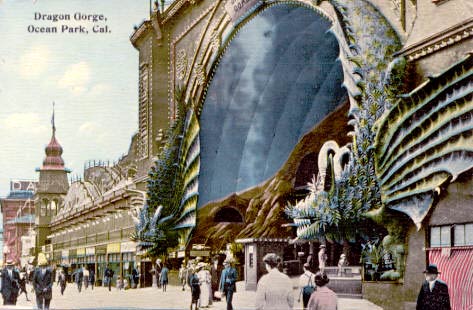
Rockfish from California piers —
Although rockfish are a favorite fish of many anglers in California, their importance at California piers varies depending upon the geographic area. Although common to many central and northern California piers, they are fairly rare at most southern California piers. The one exception is California scorpionfish, a member of the rockfish family (but commonly called sculpin in SoCal). Most rockfish are cold-water, mid-to-deepwater fish. Although a few species are shallow-water species, they are commonly only encountered in rocky areas, environments unlike that found at most SoCal sandy-beach piers.
In 2006 Milton Love at the University of California, Santa Barbara asked Pier Fishing in California for a review of rockfish caught at California piers. Herein is an updated revision to that report, this one dating to 2011.
Rockfish Reported on California Piers — (includes DF&G Surveys, PFIC Reports, as well as personal records of KJ, Snookie (Newport Pier and Balboa Pier), and Boyd (Goleta Pier)
Originally 2006, Updated 2011
San Diego County
Imperial Beach Pier: California scorpionfish
Ocean Beach Pier: California scorpionfish
Crystal Pier: California scorpionfish, brown rockfish
Shelter Island Pier: California scorpionfish
Oceanside Pier: California scorpionfish
Oceanside Harbor Pier: California scorpionfish
 California scorpionfish
Orange County
San Clemente Pier: California scorpionfish
Balboa Pier: California scorpionfish, bocaccio
Newport Pier: California scorpionfish, olive rockfish, calico rockfish, bocaccio, chilipepper rockfish, treefish
Huntington Beach Pier: California scorpionfish
Seal Beach Pier: California scorpionfish
 California scorpionfish
Los Angeles County
Long Beach Shoreline Piers: kelp rockfish, black & yellow rockfish
Cabrillo Beach Pier: California scorpionfish, brown rockfish, copper rockfish, gopher rockfish, black & yellow rockfish
Green Pleasure Pier/Catalina: California scorpionfish, treefish
Cabrillo Mole/Catalina: California scorpionfish, treefish, kelp rockfish, brown rockfish, olive rockfish
Redondo Beach Pier: California scorpionfish
Redondo Sportfishing Pier: California scorpionfish, grass rockfish, brown rockfish
Hermosa Beach Pier: California scorpionfish, calico rockfish
Santa Monica Pier: California scorpionfish
Malibu Pier: California scorpionfish, bocaccio
Paradise Cove Pier: brown rockfish, grass rockfish
 Brown Rockfish
Ventura & Santa Barbara County
Point Hueneme Pier: grass rockfish
Ventura Pier: brown rockfish, grass rockfish
Stearns Wharf: California scorpionfish, bocaccio
Goleta Pier: kelp rockfish, brown rockfish, grass rockfish, bocaccio, vermilion rockfish, calico rockfish, gopher rockfish, blue rockfish, black rockfish, black & yellow rockfish, yellowtail rockfish
Gaviota Pier: kelp rockfish, bocaccio
 Grass Rockfish
San Luis Obispo County
Pismo Beach Pier: bocaccio
Avila Pier: bocaccio, grass rockfish
Port San Luis Pier: bocaccio, kelp rockfish, gopher rockfish, brown rockfish
Morro Bay North T-Pier: bocaccio, brown rockfish, gopher rockfish, kelp rockfish, vermilion rockfish, olive rockfish, grass rockfish
Morro Bay South T-Pier: grass rockfish, copper rockfish, brown rockfish, gopher rock rockfish, black rockfish
Cayucos Pier: bocaccio
San Simeon Pier: bocaccio
 Black and Yellow Rockfish
Monterey County
Monterey Coast Guard Pier: kelp rockfish, black & yellow rockfish, blue rockfish, olive rockfish, grass rockfish, black rockfish, brown rockfish, copper rockfish, gopher rockfish, calico rockfish
Monterey Wharf #2: bocaccio, gopher rockfish, kelp rockfish
Moss Landing Pier (now closed): bocaccio
 Copper Rockfish
Santa Cruz County
Seacliff Pier: bocaccio, brown rockfish
Capitola Wharf: Brown rockfish, bocaccio, blue rockfish, gopher rockfish, vermilion rockfish,
Santa Cruz Wharf: blue rockfish, brown rockfish, bocaccio, gopher rockfish, black rockfish, kelp rockfish, yellowtail rockfish, copper rockfish
 Bocaccio (juvenile)
San Mateo County:
Princeton Harbor Pier: brown rockfish, gopher rockfish, kelp rockfish, grass rockfish
Pacifica Pier: bocaccio, brown rockfish
San Francisco County
Fort Point Pier: brown rockfish
Fort Mason Piers: brown rockfish, black rockfish, gopher rockfish
S.F. Municipal Pier: brown rockfish, grass rockfish
Pier 40: brown rockfish
Pier 7: brown rockfish
Agua Vista Pier: kelp rockfish
South SF Bay Piers
Oyster Point Pier: black rockfish
East SF Bay Piers:
FDR Pier (now closed): brown rockfish
Port View Park Pier/7th St: brown rockfish, blue rockfish, gopher rockfish
Berkeley Pier: brown rockfish, chilipepper rockfish, gopher rockfish, kelp rockfish, grass rockfish
Golden Gate Field’s Pier (now closed): brown rockfish
Ferry Point Pier: brown rockfish
North SF Bay Piers
Red Rock Pier (now closed): bocaccio, brown rockfish
Paradise Beach Pier: brown rockfish
Elephant Rock Pier: chilipepper rockfish, grass rockfish, brown rockfish, kelp rockfish, blue rockfish, black rockfish
Angel Island Pier: brown rockfish, black rockfish
Sausalito Pier (now closed): brown rockfish
Fort Baker Pier: blue rockfish, brown rockfish, orange rockfish, grass rockfish
 Black Rockfish
Northern California
Point Arena Pier: bocaccio, black rockfish, grass rockfish
Del Norte St. Pier/Eureka: brown rockfish
Eureka Municipal Wharf: black rockfish, brown rockfish
Commercial St. Dock/Eureka: black rockfish, brown rockfish, grass rockfish, copper rockfish
Adorni Pier/Eureka: brown rockfish
Trinidad Pier: black rockfish, grass rockfish
Citizen’s Dock—Crescent City: black rockfish, copper rockfish
 Rockfish at Sunset
Where bocaccio, vermilion or orange rockfish are mentioned it is generally the juvenile variety.
The End of a Dream? Boyd and the Goleta Pier Angler Center
 Goleta Pier Angler Center
Sometimes things just don’t make sense. That was the reaction when word filtered out in September of 2011 that Boyd Grant, the venerable, Yoda-like “Pier Master” at the Goleta Pier had been asked to vacate his parking space at the County Park. The first reaction was an incredulous WHY? Why would the County do this? The second question asked was if his departure, from what in essence was his home, would be permanent and if it meant the end of the Angler Center?
A better question was if this was the end of a dream, a dream that had been over a decade in the making. In 1997 pierfishing.com came into existence. A few months later Boyd posted his first report, a recap of fishing at the Goleta and Gaviota piers. As communication began, a fellowship developed, and an uncommon interest in the Goleta Pier emerged.
Boyd, a gentle man, interested in the social welfare of his community, saw the pier and park as a perfect place to test a theory. Could a person, through individual example (and an amazing amount of hard work) make a real difference?
 Boyd at the Angler Center
Could he impact the behavior of those visiting the pier and park, behavior that in the mid-2000s included a large contingent of homeless alcoholics and druggies who called the park their home and could be abusive and scary to the casual visitor.
Could he impact the fishermen on the pier? Could he bring his ethical views of angling and his “leave it cleaner upon departure than arrival” philosophy as far as pier cleanliness?
Lastly, could he impact the way the County treated the park and pier? Could he convince the County workers that they should take pride in their duties and get a buy in on the importance of the pier?
Ultimately he would be successful on the first two questions. His failure to achieve the third led to his removal and yes, both the closing of the Angler Center and the end of the dream.
His hard work and achievements are numerous. For years he maintained a website detailing the day-to-day activities at the pier. For two years he chronicled the conditions of the pier and recorded the various species that were landed. For two years he spent literally hundreds of hours cleaning the pier on his own, all voluntary, non-paid hours. He set up several statewide meetings of anglers, and was involved in a number of classes and derbies at the pier. He set up the installation of fishing line recycle bins at the pier.
 And then, with the establishment of the UPSAC Angler Center at the pier in 2008, he became the official “Pier Host.” He became the eyes and ears of the pier; the man anglers could turn to for advice—including how to properly handle fish and other wildlife at the pier. He became a teacher, advisor, and ultimately a spokesman for the pier. Dozens of kid’s fishing tournament were conducted with his help at the pier. Dozens of injured birds were saved with his help. Untold numbers of anglers changed their views on angling under his gentle tutelage. Visitors and regulars alike gained a new respect for the environment at the pier. And hundreds and hundreds of hours were spent cleaning the pier.
In recognition of his accomplishments, Boyd himself and UPSAC were given recognition by the Santa Barbara Board of Supervisors in November 2010. Among the six stated accomplishments:
 “Whereas, UPSAC volunteers have staffed the Goleta Pier Angler Center and have provided instructions to over 2,000 children and youth since the Goleta Pier Angler Center was opened…”
 A scene at the 2010 UPSAC/GFA Kids Fishing Derby — Santa Barbara County Supervisor Janet Wolf and Park Assistant Director Erik Alexson picking raffle numbers.
“Whereas, the Goleta Pier volunteer host, Boyd Grant, in addition to staffing the Angler Center also cleans the handrails and benches of two-thirds of the Goleta Pier.”
“Therefore, be it hereby ordered and resolved that the Board of Supervisors of Santa Barbara County do hereby commend the United Pier and Shore Anglers of California, its Board of Directors, President Ken Jones, and Pier Host Boyd Grant for their services to our community and their efforts to support of the partnership with Santa Barbara County Parks to operate the Goleta Pier Angler Center.”
 Santa Barbara County and UPSAC officials at the 2008 opening of the Angler Center.
A dynamic, synergistic effort seemed to be taking place and everyone seemed to be pleased. But as we all know, you can never please all the people all the time. An exodus of top personnel had left the Park District between 2008 and 2011 and new people were now in charge, people with different ideas and a different agenda. Unfortunately that agenda did not include support for Boyd or the Angler Center.
As the time of the 2008 agreement that established his position as Pier Host, Boyd had also agreed to be a Park Host. This allowed him to park his motor home at the park and remain in close proximity to the Angler Center. In exchange, as part of the Park Host Agreement, he was required to spend 20 hours per week cleaning the park. Boyd quickly developed a routine that would begin most mornings at 5AM. Clean the bathrooms, empty trashcans, pick up whatever flotsam and jetsam had been left by late night revelers, and clean the pier (which could be a monumental task in itself). Most days it would take at least three hours and then he would take a break, have a cup of coffee, and take a shower prior to heading out to the Angler Center to begin his duties as Pier Host (where he would typically work another 30-40 hours a week).
 Boyd cleaning the pier
Out of necessity, Boyd had begun his day early, far before the rangers arrived at the park. Most respected the hard work and early hours but unfortunately those same hours would be used against him. When UPSAC was informed that Boyd had three weeks to leave the park, the charge was made that Boyd was not working the required 20 hours a week as Park Host (and that part of his hours were being spent on work for the Angler Center). Interviews with those in the know, the locals who visited the pier early in the morning themselves, verified his cleaning and the number of hours he worked. But Park personnel never bothered to interview the locals — and failed to say where they had gotten their information.
As talks continued in an attempt to work out a solution agreeable to both parties, one that would allow Boyd to stay at the Park, and the Angler Center to remain open, the reasons for Boyd’s removal evolved. New arguments were given by the Park personnel. The first was that Park Hosts are supposed to have a one-year limit at a park. After one year hosts have to move on to another park and give up their park position. UPSAC asked why this had never been enforced before? A number of people, including Boyd, had exceeded the one-year time limit. And though UPSAC argued that Boyd’s position was unique—since he was the only Pier Host (at the only park with a pier), and that his unique position justified a close proximity to the pier, the argument fell on deaf ears.
The final argument from the Park personnel was that the Park District was now out of money (although Park personnel seem to have a pretty hefty paycheck). The District’s argument was that the Park would need additional volunteer Park Hosts to maintain the park. They, in turn, would need all the available parking spaces. UPSAC argued that there was sufficient room for Boyd AND additional Park Hosts. UPSAC also argued that the Pier Host position should receive equal respect as the Park Host position. Again the arguments fell on deaf ears.
Given the variety of reasons given for his removal, the fact that these issues changed over the weeks of discussion, and that Boyd himself was never allowed to be part of the discussion (in fact was never given a face to face meeting until the last day when he was told to turn over his keys), it appears that the park personnel simply wanted him out. Why? The most likely reason was that, at times, he could be a thorn in their side. He asked park personnel to give the pier the attention it deserved, to do more at the park. He asked for additional cleaning supplies, he asked for support from management when there were problems at the park, and he refused to become a spokesman for the County Parks when it decided to push for paid parking and other changes he deemed detrimental to the park.
All Boyd wanted was to see people do their job. They perhaps would never have his interest in regards to the pier but at least they should realize that the pier was a key part of the park. This friction was most likely the real reason why he was asked to leave. It’s a problem that can crop up wherever there are moribund agencies that are poorly managed and staffed by poorly trained and motivated employees.
It is likely these are the true reasons for his departure and, most likely, the reasons for the end of a dream. Perhaps he simply wanted to do too much. Perhaps there is little room left for those such as Boyd who are willing to sacrifice their personal time and energy to improve a small piece of our society.
Perhaps it is the end of a dream and, if so, not only will the pier and the park itself suffer but so too the entire people of Santa Barbara County. Tis sad.
 (An empty chair at a vacant Angler Center seems appropriate since the County seems to feel it’s time to retire Boyd and the Center.)
The Nitty Gritty California Pier Trivia Quizzes —
 If you have read Pier Fishing in California you should be able to answer the following questions without breaking a sweat. If you can’t, I expect you to sleep the next seven nights with the book under your pillow. Just pretend it’s a love letter from your first boyfriend, girlfriend — or whatever. By the way, the answers will be given at the bottom. And shame on those who do not have the book, you should get it.
You will need to write your answers on a piece of paper.
 Nitty Gritty California Pier Trivia Quiz #1
Citizen’s Dock Imperial Beach Pier Berkeley Pier
Elephant Rock Pier Seacliff State Beach Pier
Leopard Shark Round Stingray Bat Ray
Brown Smoothhound Shark Common Thresher Shark
1. The end of this pier is a sunken “concrete ship.”
2. This pier calls itself the most “southwesterly pier in the United States.”
3. This pier was built by the citizens of the town after a tidal wave washed away their former wharf.
4. This pier was the first to be funded and renovated by the California Wildlife Conservation Board.
5. When built, this pier was supposed to be reserved for kids.
6. Populations very dependent on water temperature; as the water temperature rises so does the presence of these fish.
7. These can be pests in areas that grow oysters commercially.
8. Extremely common in San Francisco Bay; one of the most numerous fish at some piers.
9. Caught throughout California but most common in San Francisco Bay.
10. Typically found in deep water but ventures surfside at night (so they can visit the piers).
 Nitty Gritty Pier Trivia Quiz #2
Vallejo Pier Newport Pier Paradise Cove Pier
Aliso Beach Pier Green Pleasure Pier
Striped Bass Senorita Cabezon
Candlestick Point Pier Belmont Shores Pier
1. Only twenty yellow snake eels have ever been landed in California. The largest ever taken of the species was a 34 1/2 inch specimen landed on a California pier. On which pier was it landed
2. Although many piers have appeared in movies, television shows, and commercials, only one, to my knowledge, has been the home (sort of) to a television series. Hint: think of Jim Garner and the Rockford Files. Which pier?
3. Although fishing can be excellent from this pier, it is almost always empty of anglers during many Sundays in the Fall. Which pier and why?
4. A 194-pound, eight-foot-long white sturgeon was taken at this pier in 1980. Which pier?
5. This pier sits next to the last commercial dory fishing fleet on the West Coast. Which pier?
6. This pier is probably the best is California from which to catch halfmoons (blue perch) or moray eels. Which pier?
7. This pier was built in a diamond shape so that anglers would be offered more railing space (they could fish in the middle of the pier).
8. Sometimes people don’t eat the meat of this fish because it is green or blue colored when they clean the fish. They’re missing a treat! Upon cooking, the meat turns white and is delicious. The roe however, is poisonous.
9. Although primarily known as a saltwater fish, the California record for the species was caught in a freshwater lake.
10. These fish are probably the best “bait stealers” in the state.
 Nitty Gritty California Pier Trivia Quiz #3
Santa Monica Pier Ocean Beach Pier Pier 7
Capitola Wharf San Mateo Pier
Manhattan Beach Pier Crystal Pier Adorni Fishing Pier
Candlestick Point Pier South Beach Harbor Marina Pier
1. The Round House Marine Lab sits out at the end of this pier.
2. This is the only pier on the West Coast with cabins built over the blue Pacific.
3. The Pacific Park amusement park is located on this pier.
4. This pier sits next to Pac Bell Park, the home of the San Francisco Giants.
5. This pier is supposed to be the longest concrete pier in the world.
6. This pier sits within the oldest seaside resort on the Pacific Coast.
7. This pier is part of a beautiful recreation center.
8. A common name given to this pier by anglers who fish this pier is the shark pier. What is the real name.
9. This pier sits next to the former home of the San Francisco Giants.
10. More commercials are filmed at this pier than any other pier in northern California.
 Answers to Nitty Gritty California Pier Trivia Quiz #1
(1) Seacliff State Beach Pier (2) Imperial Beach Pier (3) Citizen’s Dock (4) Berkeley Pier (5) Elephant Rock Pier (6) Round Stingray (7) Bat Rays (8) Brown Smoothhound Shark (9) Leopard Shark (10) Common Thresher Shark
 Answers to Nitty Gritty California Pier Trivia Quiz #2
(1) Belmont Shores Pier (2) Paradise Cove Pier (3) Candlestick Point Pier (4) Vallejo Pier (5) Newport Pier (6) Green Pleasure Pier — Avalon (7) Aliso Beach Pier (  Cabezon (9) Striped Bass (10) Senorita
 Answers to Nitty Gritty California Pier Trivia Quiz #3
(1) Manhattan Beach Pier (2) Crystal Pier (3) Santa Monica Pier (4) South Beach Harbor Marina Pier (5) Ocean Beach Pier (6) Capitola Wharf (7) Adorni Fishing Pier ( San Mateo Pier (9) Candlestick Point Pier (10) Pier 7


Pacific Bonito — a true fighting fish
 Bonito — Venice Pier
Mackerel and Tuna—Family Scombridae
Species: Sarda chiliensis (Cuvier, 1832); from the Greek word sarda (an ancient name for an European species of bonito) and chiliensis (in reference to Chile, South America, where the species was first recognized). Subspecies (those in California): Sarda chiliensis lineolata.

Bonito — Ben Acker (DompfaBen), Cabrillo Mole, Avalon, Catalina Island
Alternate Names: Most commonly called bonehead but also given the names bone, boner, bonefish, flasher, Laguna tuna, magneto, bongo, striped tuna and little tuna. One of my favorites—from the PFIC Message Board—Mr. Bojangles. Called bonito del Pacífico oriental in Mexico.
 Bonito — Venice Pier
Identification: Tuna-shaped, elongated and pointed at both ends; a series of 6 to 8 finlets that follow the second dorsal fin and anal fin. Coloring dark blue above with greenish reflections and a metallic luster shading into silver below; several dark oblique lines on the back.

Bonito with usual striping caught by Mahigeer (Hashem Nahid), Cabrillo Mole, 2016
 Unusual striped bonito caught by Mahigeer, (Hashem Nahid), Cabrillo Mole, 2016
Size: To 40 inches although most caught from piers are less than 24 inches. For years the California record fish was listed as a fish that was caught in Malibu Cove in 1978 with a weight of 22 lb 3 oz. Today the record is listed as a 21 lb 5 oz. fish taken at the 181 Spot in 2003. I’m not sure why the new, lighter fish is the record (and I haven’t been able to find out).
 Bonito — Scott Geerds, Cabrillo Mole, Avalon, Catalina Island
Range: There are two subspecies. One, the northern population, Sarda chiliensis lineolata, is found from Southern Baja California and Gulf of California to Copper River in Alaska. The southern population, Sarda chiliensis chiliensis, is found in the subtropical eastern Pacific, Peru to Chile, and off Japan. As a general rule they’re only found north of Point Conception during El Niño, warm-water conditions (and I witnessed several large bonito, all over ten pounds, being caught off of Elk in Mendocino County during the El Niño year of 1983).
 Bonito — Rita Magdamo, Cabrillo Mole, Avalon, Catalina Island
Habitat: Pelagic, although enters bays, especially those with warm water outlets.
 Bonito — James Liu (GDude), Cabrillo Mole, Avalon, Catalina Island
Piers: Common at most southland piers during and after warm-water years, both those in bays and those at oceanfront spots. Best bets: Ocean Beach Pier, Oceanside Pier, San Clemente Pier, Balboa Pier, Newport Pier, Cabrillo Mole (Avalon)—#1, Redondo Beach Pier, and the Hermosa Beach Pier. Stearns Wharf (Santa Barbara) and Goleta Pier can be decent, especially in the fall.

Bonito — Mike Donahue (SD Pier Rat), Ocean Beach Pier, San Diego
Shoreline: Sometimes taken by shore anglers fishing from jetties in southern California, especially the jetty at Redondo Beach.
 Bonito — Mike Granat, Balboa Pier
Boats: One of the favored boat species although the numbers can show a drastic change year-to-year depending upon water temperature.
 Angie and her first bonito — Balboa Pier
Bait and Tackle: Bonito primarily feed on fish and squid and are taken on a variety of baits and lures. The best bait is live anchovies or small sardines fished on a sliding leader or with a cast-a-bubble. The best lure is a bonito feather affixed to either a cast-a-bubble, a wooden float, a Styrofoam float, or a golf ball—the bubble/float/golf ball causes commotion on the surface which attracts the bonito and keeps the lure near the top.
 Bonito — Scott Geerds, Cabrillo Mole, Avalon, Catalina Island
Food Value: Bonito are considered fairly good quality but require cleaning soon after capture. If bled quickly, or even better if filleted and then put on ice, the flesh can be quite tasty. However, if allowed to warm up in a gunnysack on the nice hot surface of a pier the flesh can be almost inedible (which is true with many fish). Some parts of the flesh are dark colored—bloody and strong flavored. Remove those parts of the flesh unless you desire them for smoking. Given the high oil content of the flesh, the best cooking methods are broiling or bar-b-cuing the meat; the worst are methods like deep-frying that would add more oil. In addition, smoked bonito and pickled bonito are also very good.
When I was young, and lived in San Diego, I would often go out on the half-day boats to catch some bonito. Most of the bonito (in the gunnysacks) would wind up as fertilizer for my mom’s roses. However, a couple of the cooks on the boats would cook up some of the fresh-caught fish. A favorite method was to cut thin slices of meat from the head of the bonito (up behind the eyes) and then lightly cook the slices on a grill using just a little butter. Flavored with soy sauce, it was delicious.
Today, given that we’ve all become goumands, we would probably serve the thin slices raw as sashimi and include a little dipping sauce, i.e., wasabi paste and soy sauce draped over a daikon radish. One recommended dipping sauce even includes fish flakes from bonito, it’s a sauce made from shōyu (a type of soy sauce), mirin (a sweet cooking wine) and the bonito flakes.
 Bonito — Hashem Nahid (Mahigeer), Cabrillo Mole, Avalon, Catalina Island
Comments: Many people feel that bonito are among the strongest fighting fish, pound for pound, in the sea. For many years the place to go for bonito was the Redondo Sportfishing Pier in Redondo Harbor. This was especially true during the colder-weather, winter months. That narrative was altered when the nearby power plant changed ownership and changed procedures. Instead of always being on, and sending a steady stream of hot water into the harbor (where it emerged at the famous “bubble hole”), it became a sporadic occurrence. Visitors never knew when the hot water, or the bonito, would be showing up. Locals learned to check out the tall towers to see if they were emiting smoke. If they were, the hot water would be bubbling up in the harbor and bonito probably would be present. Today the pier is closed but hopefully will be rebuilt. Many also hope the warm water will return to the harbor.
Bonito or bonita? The correct spelling is bonito but a surprisingly high number of people over the years, including journalists and writers who should know better, have used bonita as the moniker for these fish. One day on the Pier Fishing in California message board someone said his daughter had been called a bonito and she got upset until someone told her that the name meant pretty in Spanish. People then chimed in that she should have been called a bonita since that was the feminine name and bonito was the masculine name. As for the fish, given the strong, powerful fight they typically put up, I think I will stick with bonito as the name.
 Bonito — San Clemente Pier
 Bonito —Stecve Barcellos (SteveO), Cabrillo Mole, Avalon, Catalina Island

Bonito — Imperial Beach Pier
 Bonito — Adam Cassidy (Baitfish), Cabrillo Mole, Avalon, Catalina Island
 Bonito — Kyle Pease, Cabrillo Mole, Avalon, Catalina Island
 Bonito — Kyle Pease, Avalon, Catalina Island
 Bonito — Rita Magdamo, Cabrillo Mole, Avalon, Catalina Island
 Bonito — Ken Jones (The Pier Fisherman), Cabrillo Mole, Avalon, Catalina Island
 Bonito — Steve Barcellos (SteveO), Cabrillo Mole, Avalon, Catalina Island
 “Tres Bonitos” — Rita Magdamo, Ross Kestin (GordoGrande), and Kyle Pease, Cabrillo Mole, Avalon, Catalina Island

 Bonito caught at the Goleta Pier in 2016 by seabass.seeker
 My son Mike with a good-sized bonito and small yellowtail
 A big bonito caught on the “Sea Wolf”
____________________________________________________________________________________
“Stuck in Catalina With the Bonito Blues Again”

 Written for and dedicated to Hashem aka Mahigeer when he was seeking out his first bonito at Catalina in 2006. Although the rest of the UPSAC/PFIC gang was pulling in the bonies, Hashem just couldn‘t seem to hook one. Today he’s learned the “Tao of Bonito.”

Bonito —Hashem Nahid (Mahigeer), Cabrillo Mole, Avalon, Catalina Island
Oh, the Dompha, he draws circles
Up and down the mole.
I’d ask him what the matter was
But I know that he don’t talk.
And the anglers treat me kindly
And furnish me with line,
But deep inside my heart
I know I can’t escape.
Oh, Mama, can this really be the end,
To be stuck in Catalina
With the bonito blues again.
Well, Ken, he’s in the alley
With his pointed shoes and his bells,
Speaking to some French girl,
Who says she knows me well.
And I would send a message
To find out if she’s talked,
But the tackle store’s been stolen
And the tackle box is locked.
Oh, Mama, can this really be the end,
To be stuck in Catalina
With the bonito blues again.
Gordo tried to tell me
To stay away from that Catalina mole
He said that all those older fishermen
Just drink up your blood like wine.
An’ I said, “Oh, I didn’t know that,
But then again, there’s only one I’ve met
An’ he just smoked my eyelids
An’ punched my cigarette.”
Oh, Mama, can this really be the end,
To be stuck in Catalina
With the bonito blues again.
Grandpa died last week
And now he’s buried in the kelp,
But everybody still talks about
How badly they were shocked.
But me, I expected it to happen,
I knew he’d lost control
When he built a fire on the mole
And shot it full of holes.
Oh, Mama, can this really be the end,
To be stuck in Catalina
With the bonito blues again.
Now the GDude came down here
Showing ev’ryone his rod,
Handing out free tickets
To the gathering on the mole.
An’ me, I nearly got busted
An’ wouldn’t it be my luck
To get caught without a license
And be discovered beneath a trunk.
Oh, Mama, can this really be the end,
To be stuck in Catalina
With the bonito blues again.
Now Baitfish looked so baffled
When I asked him why he dressed
With twenty pounds of feathers
Stapled to his chest.
But he cursed me when I proved it to him,
Then I whispered, “Not even you can hide.
You see, you’re just like me,
I hope you’re satisfied.”
Oh, Mama, can this really be the end,
To be stuck in Catalina
With the bonito blues again.
Now Mahigeer gave me two cures,
Then he said, “Jump right in.”
The one was Persian medicine,
The other was just plain Raki gin.
An’ like a fool I mixed them
An’ it strangled up my mind,
An’ now people just get uglier
An’ I have no sense of time.
Oh, Mama, can this really be the end,
To be stuck in Catalina
With the bonito blues again.
When Rita says come see her
In her honky-tonk lagoon,
Where I can watch her waltz for free
‘Neath her Avalonian moon.
An’ I say, “Aw come on now,
You must know about my debutante.”
An’ she says, “Your debutante just knows what you need
But I know what you want.”
Oh, Mama, can this really be the end,
To be stuck in Catalina
With the bonito blues again.
Now the bricks lay on Metropole
Where the neon madmen climb.
They all fall there so perfectly,
It all seems so well timed.
An’ here I sit so patiently
Waiting to find out what price
You have to pay to get new balls and feathers
After losing them more than twice.
Oh, Mama, can this really be the end,
To be stuck in Catalina
With the bonito blues again.
(With apologies to Bob Dylan and “Stuck Inside of Mobile With The Memphis Blues Again)
Blog Archives
- September 2025 (1)
- August 2024 (1)
- September 2023 (1)
- September 2022 (1)
- April 2022 (5)
- September 2021 (1)
- February 2021 (1)
- January 2020 (1)
- August 2019 (1)
- January 2019 (1)
- October 2018 (1)
- September 2018 (2)
- August 2018 (1)
- June 2018 (3)
- April 2018 (10)
- March 2018 (22)
- February 2018 (3)
- January 2018 (4)
- December 2017 (2)
- November 2017 (2)
- September 2017 (3)
- August 2017 (2)
- July 2017 (5)
- June 2017 (3)
- May 2017 (5)
- April 2017 (1)
- March 2017 (4)
- February 2017 (1)
- January 2017 (2)
- December 2016 (5)
- November 2016 (10)
- October 2016 (33)
- September 2016 (13)
- August 2016 (1)
- February 2016 (1)
- January 2016 (1)
- November 2015 (1)
- October 2015 (3)
- September 2015 (4)
- August 2015 (27)
- July 2015 (1)
- May 2015 (7)
- April 2015 (13)
- February 2015 (1)
- January 2015 (1)
- December 2014 (2)
- November 2014 (16)
- October 2014 (4)
- September 2014 (8)
- July 2014 (1)
- June 2014 (1)
- May 2014 (2)
- April 2014 (1)
- February 2014 (3)
- December 2013 (3)
- October 2013 (1)
- September 2013 (1)
- August 2013 (1)
- July 2013 (1)
- June 2013 (1)
- April 2013 (1)
- March 2013 (21)
- February 2013 (2)
- May 2012 (1)
- March 2012 (7)
- February 2012 (5)
- January 2012 (8)
- December 2011 (4)
- October 2011 (4)
- September 2011 (1)
- August 2011 (3)
- July 2011 (5)
- June 2011 (1)
- April 2011 (1)
- March 2011 (5)
- February 2011 (2)
- January 2011 (2)
Support Ken Jones
If you appreciate Ken's writings on fishing, please consider making a donation for this unique content. Your support will help Ken to continue publishing knowledgeable and entertaining articles.
Pier Fishing in California, 2nd Ed.

The ultimate pier fishing resource for Pacific Coast pier anglers with Over 350 new photos and illustrations added to this edition, including detailed, species-specific illustrations of fish-cleaning, rigging illustrations, and maps. The history and culture of each pier is thoroughly covered.
Buy the book from pierfishing.com or Amazon!
Recent Photos