This past week I heard that the Trinidad Pier is closed for reconstruction. I knew it was coming but it’s still a shock to think that the old pier will be gone. But at least I have my memories —
 Did you hear the one about Rosie and The Creature From The Black Lagoon? I did! The story’s main characters were Rosie, from Salty’s Bait and Tackle in Trinidad, and an unidentified creature that fell in love with our heroine. Well, not exactly, that might be a slight stretch. The actual incident took place during the summer of 1996 when Rosie decided to get in a couple of hours of late afternoon fishing down at the picturesque old pier in Trinidad Harbor. She was using an Abu-Garcia outfit loaded with 20-pound test line, and for bait she had brought along some herring. Maybe a salmon would grab her bait? Rosie cast out her bait to the waters on the north side of the pier and began to wait for a strike. When it came, she was in the fight of her life. Something grabbed the bait and took off on the start of a long, long fight. Rosie was soon joined by friends and onlookers who shortly thereafter dubbed her unseen foe, “The Creature From The Black Lagoon.” It actually wasn’t anything quite so exotic but you never know until you see your quarry. Eventually she did see the fish, a large 100+ pound big skate (and a name was never more appropriate) that measured 4 1/2′ wide and 5 1/2′ long.
It took Rosie, and several of her friends, 45 minutes to land the obstinate critter that apparently did not want to end up in Rosie’s kitchen (but it did). It may have been, in fact probably was, the largest fish ever landed from the pier. Although local boaters have brought in some huge salmon, lingcod, and Pacific halibut, I doubt if any was as hard to land as Rosie’s big skate. Keeping the fish out of the rocks and kelp that surround the pier, as well as keeping it out of the pilings, had to be a combination of Herculean skill combined with a good amount of luck.
 This pier, known to some as the Seascape Pier, and once known to many as the Hallmark Pier, is the northernmost oceanfront pier in the state and sits in an absolutely beautiful, postcard setting. The small cove and wooden old pier have a charm all their own but then there’s also that million dollar, nature lover’s view of the coast extending south of Trinidad. It’s a milieu of emerald Redwood forests reaching down to the waters edge where they meet the cobalt blue Pacific and its rocky shoreline. Throw in a little fog for atmosphere and you’ve got quite a Kodak pleasing picture.
Just a short, half hour or so drive north of Eureka, the pier gets steady if not necessarily heavy use by pier anglers. Although fishing from the pier is generally only fair, few seem to mind. For most people, especially visitors from southern California, the pier fishing itself is secondary. More visited are the nearby redwood groves and the spectacular coastline. While most anglers come for the seasonal salmon and bottom fishing (including some big lings up by Redding Rock), excellent results can also be obtained in the nearby surf for redtail perch and smelt, while coastal lagoons offer a relaxed environment with plentiful trout.
 Environment. The pier is situated in Trinidad Harbor, which means it is protected from the most severe storms by the adjacent Trinidad Head. Home at one time to those seeking otter and whale, the harbor today primarily serves as the home base for commercial and recreational fishing. Out toward the end of the 540-foot pier is a ramp leading down to a gas dock and the skiff rental operation. In addition, there will usually be several party boats tied to the dock. The boats try to squeeze in several months of good weather fishing, generally June to September.
The commercial activities on the pier do lead to some limits for pier fishermen since trucks need to unload their supplies out toward the ramp on the pier. One sign indicates the farthest spot to which anglers are allowed to fish. A second sign proclaims that fishing from the lower area is prohibited. However, one of my sources says that fishing is permitted from the end and the lower deck when the activities have ceased for the day. Ask at the bait shop for permission. The lower area is, by the way, disassembled during the winter months to prevent damage from the winter storms.
 Although the bottom of the bay is primarily sand, the area on one side of the pier presents an almost total rocky environment while the other side of the pier presents a mix of sand (mid-pier to the end) and rocks (inshore). One large rock south of the pier is Prisoner Rock, a name acquired during the gold rush when unruly prisoners would be left on it overnight to consider their misdeeds.
To the left of the pier is Little Head Rock, which effectively makes fishing a close-in activity with shallow and mid-depth areas along much of this side. Here is where the best fishing is often found. Around the rocks are more than fifty different species of algae, a variety of invertebrates, and various channels between the rocks that fish seem to love. These are the normal attributes of rock fishing and that, in essence, is what you are doing. Think of rock fishing but being able to use a light outfit to do it and, if you’re careful, being able to keep most of your riggings.
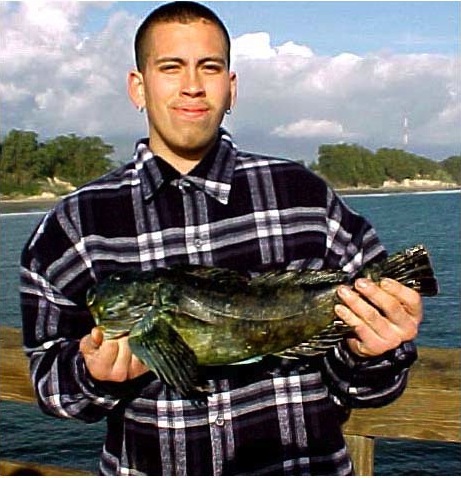
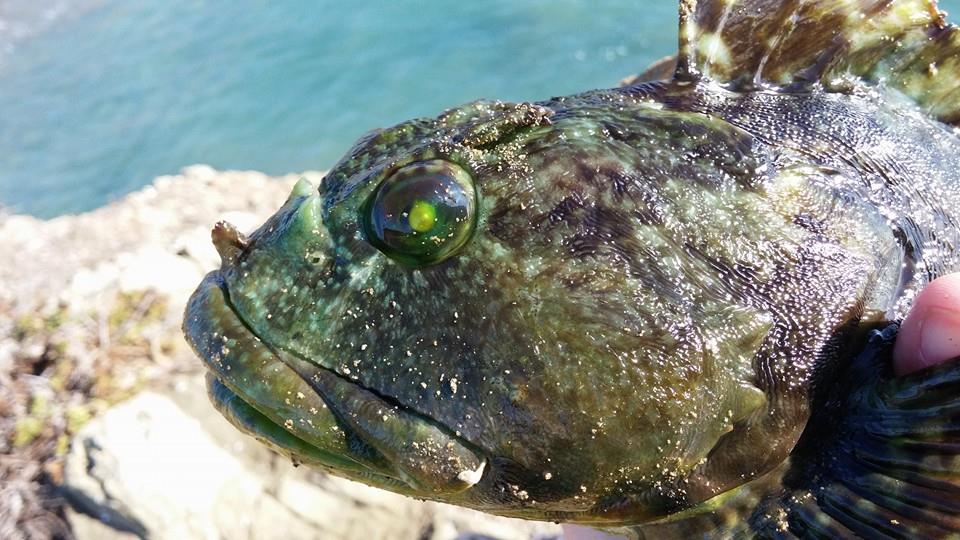
 This area almost always contains some kelp greenling and rock greenling as well as the black sheep of their Family Hexagrammidae—their big cousins, the feisty lingcod. Both the kelpies and lings seem to occur throughout the pier area while the rockies prefer the more shallow areas. Cabezon too are plentiful while a number of rockfish join in the fun. Most common are black rockfish, blue rockfish, and grass rockfish, but a few copper rockfish and black and yellow rockfish (supposedly only found north to Eureka) will also enter the bags. Summer months can also see infestations of juvenile, too-little-to-keep rockfish (black, yellowtail, bocaccio) hiding down around the kelp by the pier; be sure to return them to the water if hooked. Eels, both monkeyface eels and wolf eels are occasionally taken.
On the bay side of the pier are two large rocks on the inner portion of the pier and this is where I have caught many, many kelp greenling. Again, the fish will be down amongst the crevices and channels as well as under ledges invisible from above. Move your bait as close to the rocks as possible and be prepared to see fish emerge from under the rocks.
This side also presents the sandy bottom bay for a venue so it’s here you might encounter some sandy-shore species, perhaps even a relative of Rosie’s Black Lagoon Creature seeking revenge. More likely to be seen are redtail surfperch, calico surfperch, white seaperch, jacksmelt, Pacific herring (in the winter), sanddabs, starry flounder, sand sole, English sole, Pacific tomcod, white croaker, and a few rays and sharks. The most common shark would be spiny dogfish, the most common ray-like fish would be the aforementioned big skates, and bat rays should make an occasional appearance.
 When you can fish the end section you are closer to deep water. Here is the best section to catch lingcod (especially in the fall and winter) as well as larger rockfish and big cabezon. Straight down, or under the pier by the pilings, is the best area for pileperch.
Fishing Tips. If you want rocky shore species, fish on the left side of the pier using tube worms, fresh mussels, shrimp, or crab backs for bait. Use small, size 4-6 hooks attached directly to your line above a half-ounce to one-ounce sinker. Using a light outfit you should be able to feel your bait and keep it out of the rocks. Cast your line as close to the rocks as possible; greenling and rockfish hide under the rock and in rock crevices. As wave action sweeps your bait close to the rocks interested fish will rush out and grab it. Be prepared! Most greenling and rockfish will head straight back to their hole under the rock as soon as they grab a bait. If you let them reach their holes, you will probably lose your leader and sinker!
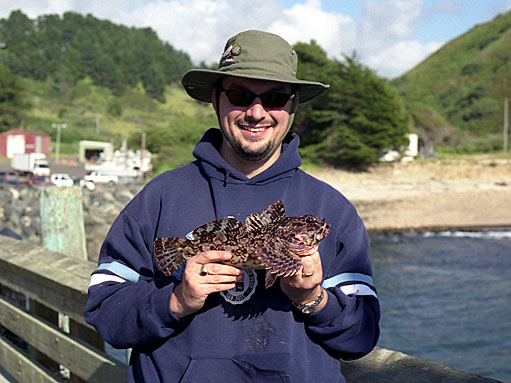
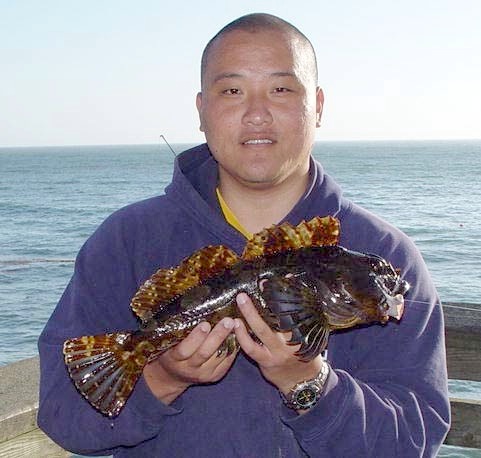
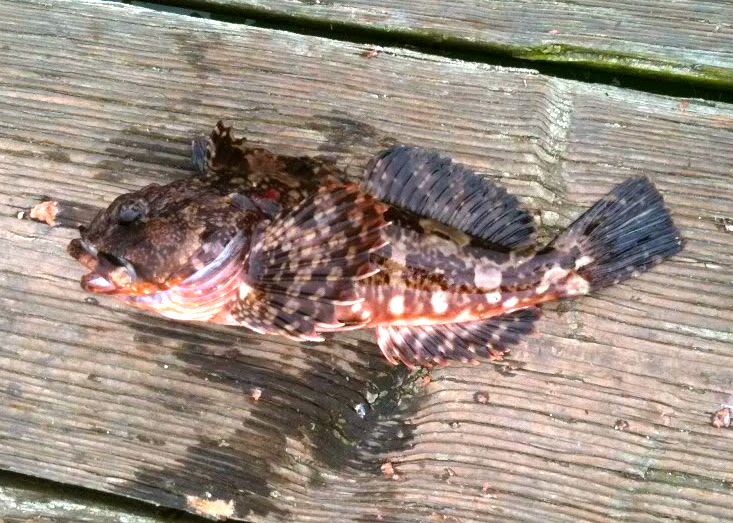
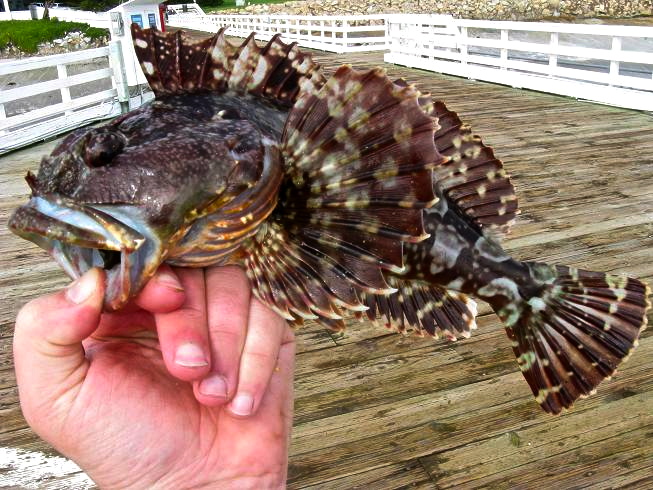
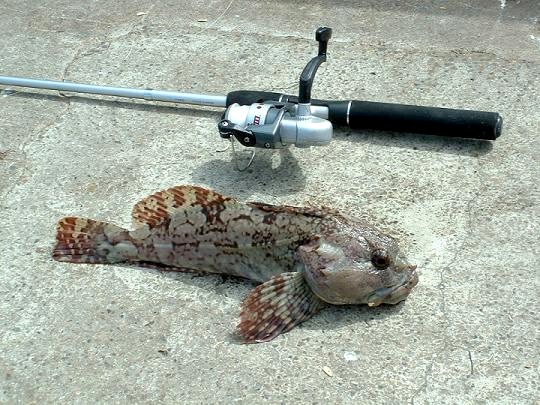
The biggest mistake made by rock anglers is using baits and hooks that are too big for most fish. Generally, the chances of hooking a large lingcod or cabezon are, with a couple of exceptions, fairly remote and many of the other fish, including perch and greenling, have fairly small mouths. Unless really in pursuit of the larger fish, you might want to try for the specimens that make up ninety percent of the fish caught here: kelp greenling, rock greenling, striped seaperch, walleye and silver surfperch, black or copper rockfish, buffalo sculpin, brown Irish lord, and the smaller cabezon and lingcod. For additional variety, try a second pole on the right side of the pier. Using the same setup, and even the same baits, you may get any of the sandy-shore species already listed.
 The exceptions to which I refer are two. The first is the success shown here by anglers using artificial lures such as Scampis and swim baits (Fish Traps, Big Hammer, etc.). There seems to be a good shot at bigger-sized rockfish, especially black rockfish, and lingcod from mid-pier to the end. The key for these fish, especially the predator and ambush loving lingcod is movement, the simulation of a live fish—and live fish move around. Soaking bait in one spot isn’t nearly as effective.
The second exception is during the late fall to winter months, from about September until December. Lingcod come into shallower water to spawn during those months and it is fairly common to see some large lings (20+ pounds) swimming around the pier. Best bait for these mean, big mama lings is a live shiner or other small fish. If those are unavailable, try a whole squid or octopus. Be sure to use a heavier line, a medium to heavy pole, and a good net. It is never easy to land a large fish on a pier and especially not one of these nasty lings. They have a habit of appearing to be finished and then showing a second wind just as you are about to net them. So, be prepared!
Tyler Epting, a PFIC regular who fished the pier extensively while attending Humboldt State College commented: “Our favorite method for teasing the big lings was to use a bobber with about 6-8’ of leader and a perch or other small fish for bait. It was the only way to fish that area without getting snagged on every cast. My buddy caught a 45” (25-ish lbs) ling from the lower dock using that method, and I caught many up to about 12 lbs. “
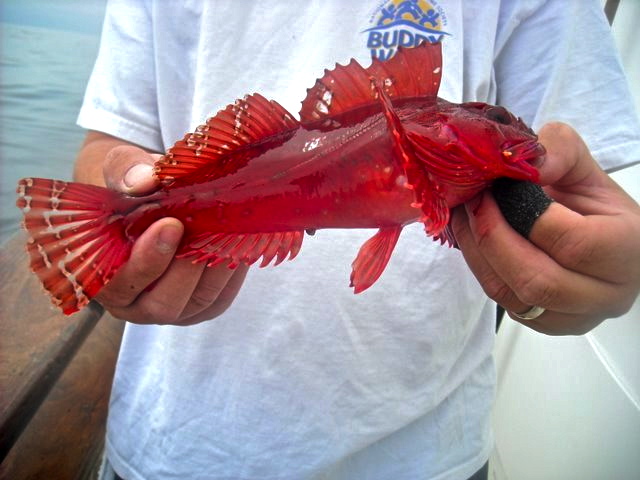
This is also one of the few piers (in California) where you may occasionally catch one of the red or orange colored rockfish. Small-to-medium-size orange (canary) rockfish (Sebastes pinniger) and even rosy rockfish (Sebastes rosaceus) have been caught off the end of the pier. Black rockfish (here called black snappers or kelp bass) are more common and frequently a school will show up by the pier; when that happens the lucky anglers will be assured a bucketful of the fish. A few small yellowtail rockfish may also be caught; be sure to return them to the water if undersized.
 Although I have heard of few salmon being taken from the pier, they are somewhat common to the sandy beach area. Best time should be July to September and your best bet would be to try using an anchovy under a float or large bobber.
As mentioned a few wolf eels also show up. One day I got a note from Dsrtegl, a PFIC regular who said: “wolf eels are fun until you try to take them off the hook. I had one crush a steel-toed Redwing boot on my foot one time…it was a 6 1/2 footer caught off Trinidad Pier. I ended up having to kill the eel to get the bloody thing to let go of my foot. Not my best day.” Apparently the same for the eel.
Special Recommendations. (1) This is a Private Pier and requires a fishing license so be prepared. Also, recognize the fact that pier fishing is of secondary importance to the commercial fishing and boat sport fishing. No one really minds if you fish but stay out of the way and don’t interfere with the customers who make money for the pier operator. (2) Clean up after yourself including leaving no trash. (3) Always bring warm clothing to this pier. The wind can be ferocious at almost any time of the year, summer fog is a definite likelihood, and wintertime storms can knock out any hopes of fishing. Best bet for good weather is in the fall when it is sometimes almost balmy.
 Author’s Note No. 1. Be sure to watch for the otters in the bay. There are quite a few of the playful beasts and they can be quite comical at times. One day I watched a pair that was checking out the skiffs tied down below the pier. They had no trouble getting into the boats and went down the line entering one boat after another. I wondered if they were looking for bait (food) left by the fishermen. As I watched, I also began to think they looked like big rats even though that doesn’t fit the normal stereotype of the species. I was curious as to whether or not they hurt the fishing since the pier has the second lowest rating of the North Country piers (in my records) and ranked the lowest in old Fish and Game records.
Tyler Epting answered my question about the otters: “The ‘sea otters’ that you saw in and around the pier are actually a local band of river otters, probably from Little River, that have taken to the sea. Hence their resemblance to ‘rats.’ This is actually more common than most people realize, and it probably does affect the fishing, as river otters are piscivorous (eat fish), as opposed to their mollusk loving cousins, the sea otter. Here’s a funny story. I was fishing the lower boat dock at Trinidad one day, and I had what I thought was a large lingcod drag my live perch very slowly under the dock. When I went to set the hook, I quickly realized that my line was snagged on something directly underneath the dock and very stationary. Right away I began to hear a chomping sound behind me, and I turned around to see a very happy otter chewing away at my perch. After the otter had finished his meal, he plopped back into the water. Further investigation found my hook firmly embedded in the side of the dock.”
Author’s Note No. 2. “Smelt rule!” That would seem to be the case based upon a study of fish collected in Trinidad Bay in 1993-94 (Mulligan and Mulligan). Numerically the top dozen species out of the 32 species collected were (in order)—surf smelt, shinerperch, topsmelt, night smelt, calico surfperch, speckled sanddab, striped seaperch, black rockfish, sand sole, slimy snailfish, spotfin surfperch, and walleye surfperch. Surf smelt, topsmelt and night smelt made up 68% of the total number of fish. These fish were captured at two surf sites in the bay and help explain why I recommend fishing by the rocks adjacent to the pier instead of casting toward the surf. Which would you prefer, a surf smelt or a cabezon?
Author’s Note No. 3. Studies done in 1965 (Miller and Gotshall) painted a somewhat different picture in regards to smelt ruling the roost. Their study, DF&G Fish Bulletin 130, took a look at the fish actually caught from the pier and compared results of sixteen piers between Pismo Beach and Trinidad. The catch per day average at Trinidad was the lowest of all the piers surveyed, averaging less than one fish per day. Nevertheless, it did show the capture of 21 different species and showed the pier being #1 in kelp greenling, brown Irish lord, buffalo sculpin and wolf-eel. That’s perhaps to be expected given the rocky environment of the pier.
 Author’s Note No. 4. The California state record grass rockfish, a fish weighing 5 lb 6 oz, was caught at Trinidad on July 14, 2006.
Author’s Note No. 5. Wish I had been at the pier this day; what a sight it would have been.
Orca hits beach for seal meal
A dozen or more people in Trinidad Tuesday witnessed one of the world’s rarest wildlife phenomena when an orca flushed a harbor seal onto Indian Beach in what may have been an attempt to teach its young to hunt. It may be the first occurrence of its kind in the United States, researchers said.
Ruby Rollings from the Seascape Pier [Trinidad Pier] was alerted to the presence of the killer whales in Trinidad Bay just before lunch, and grabbed a pair of binoculars to watch. A large adult orca was swimming in the bay with a juvenile orca and two much smaller orcas, she said.
After observing for a while, Rollings said she watched as the larger whale rode a wave onto the beach and seized a harbor seal in its teeth. ”He bit it, then he slammed the seal against the sand.” Rollings said the whale left the seal on the beach, then headed back into the bay, and eventually out to sea.
The behavior is rare among orcas. Washington-based Orca Network Director Howard Garrett was surprised to hear of the sighting and said the research community is very interested. ”That’s pretty amazing,” Garrett said.
Several other experts the Times-Standard spoke with said they had not heard of a hunt like it in North America. Brad Hanson, a wildlife biologist with the National Marine Fisheries Service, said the fact that it doesn’t happen more often has been a topic of discussion among researchers. He didn’t doubt the accuracy of the account. ”It’s hard to miss a killer whale when it’s halfway out of the water,” Hanson said.
John Ford, a whale scientist with Fisheries and Oceans Canada, said similar sightings have been reported in British Columbia, although he said it’s a rare occurrence. No experts he knows have witnessed an event like it in the United States, he said. The technique is incredible to watch, but it has downfalls. With the enormous weight of the orca flopped onto the beach, it’s possible for the animal to get stuck. Female orcas can weigh 7,000 pounds, and males up to 9,000 pounds. ”It’s a risky venture,” Garrett said.
It’s something few people will ever see in their lives. The only documented beach hunting by orcas is in Argentina’s Patagonia and the Crozet Islands in the Indian Ocean, Garrett said. But the intelligent animals are innovative: Orcas have been seen tipping ice sheets to knock seals into the water in Antarctica, and in New Zealand killer whales are known to pluck stingrays off the sea floor and toy with them at the surface, he said.
Humboldt State University Marine Laboratory technicians Alyssa Firkus and Susan Sebring were taking water samples at the Trinidad pier when they heard a man shout that there were orcas in the bay. They went to look, and were offered a ride on the water taxi. Firkus said they watched as the small group of orcas swam toward Indian Beach. The largest whale swam up on shore, half exposed, and thrashed around before backing into the water again, she said. ”That’s been my dream since I was 2 years old to see that,” Firkus said. The group then headed toward the boat launch, around the rock near the pier, under the pier and then out to sea, Firkus said.
A pod, or group, of orcas was spotted offshore by the HSU research vessel Coral Sea not long ago, said lab aquarium caretaker Grant Eberle, and orcas have been seen off the mouth of the Klamath River. A group of about 20 were seen off Newport, Ore., within the past two weeks, as well.
There are three types of orcas in the eastern North Pacific. One type eats just about any marine mammal it can get hold of, from seals to whales. Another focuses on fish, especially Chinook salmon. Another group occurs generally 25 to 30 miles offshore, in the rich continental shelf area, where tuna and sharks are key parts of their diet. The types don’t interbreed, even though they sometimes mix…
—John Driscoll, The Times-Standard [Eureka], May 22, 2008
 E-Mail Messages
Date: October 7, 2001
To: Pier Fishing In California Message Board
From: spud_boy
Subject: Eureka! (My short trip north…long story)
This weekend I drove up to see my son Sean, in Eureka, who goes to College Of The Redwoods there, and we got in some fishing. We headed up to Trinidad. We had a good time there. We stopped in a combination bait and gift shop at the pier. I was told that a couple guys got some nice lingcod there on Friday on Scampis… she claimed it was on the ‘fire’ color.
Well, I had a few Fish Traps with me, and decided to see what I could scare up with different colors. I tired a ‘chovie pattern first, with a 5”, and got some bumps and a short strike. In fact most of the hits I had over the couple hours we were there were short strikes. Two guys around me got a couple of shaker lingcod… the largest being 25” stretched out…(he didn’t have a tape measure so I volunteered mine… which didn’t make him too happy). They were being caught on white and root beer colored Scampis. Then another guy caught one on a chartreuse Hair Raiser with a grub tail…. also a shaker.
I figured out that the main difference between the brown Scampi and the brown Fish Trap I had on at the time (besides the split tail) was that the Scampi’s hook is set farther back on the body. So, not having any shorter Fish Traps with me, I took out my knife, pulled the body off the jig head and cut and inch off the front before sliding it back on. Worked right away! No keepers, but I hooked a 20” and my son caught an 18”. Mine was the bluest looking one I’d ever seen.
Got to talking to another visiting fisherman there who had caught a rock greenling a couple days earlier…. around the point from the pier. He said the body was red and the flesh was blue, and so not knowing whether it was edible or not he got rid of it. I was flipping through pictures in my Petersen guide and he identified it right off before I told him what a greenling filet might look like. Gregg
Date: June 2, 2003
To: PFIC Message Board
From: DSRTEGL
Subject: Re: Anybody fishing Trinidad Bay?
I visit the area frequently and fish Trinidad whenever I do. Try 1/2 to 1 oz bucktails in yellow of chartreuse/yellow, or 6” curly tails on jigheads in black, blue/black, purple/black for the rockfish. Cast toward the Prisoner’s Rock on the left side of the pier and be prepared to lose rigs. Greenling (my favorite) and some big perch can be fished in the kelpy areas near the cliff on the left side as well.
Date: August 24, 2003
To: PFIC Message Board
From: DSRTEGL
Subject: North Coast 8/18-8/22
8/18: Fished Trinidad for one short greenling, one 8” black rockfish, and numerous smelt. All released.
8/19: Trinidad again. Bait getting stolen constantly. A couple of small rockfish 8” +/- which I released. Finally discovered the bait stealers were really a HUGE concentration of small 2” rockfish. Got stung in the thumb by one and it still hurts today. Suddenly got a huge hit and landed a 17.5” black rockfish on a size 6 octopus hook and a tiny piece of shrimp using light line. Landed a nice perch (striped or rainbow)? Used Sabiki to catch live bait (herring and topsmelt) for live bait resulting in three huge hits but no hook ups.
8/20: Trinidad: Used Sabiki rig to catch more live bait (shiners this time) no big fish for me but three short lings were hooked and landed. Had to plead with a guy not to keep a 23” ling but he did put it back.
8/22: Last chance at Trinidad. Fished live bait again for three fights ending in broken lines, and a brief fight for bait with a river otter. Please don’t ask. One short ling was caught, as was another striped/rainbow perch of respectable size. I caught the largest walleye perch I have ever seen, and caught two MACKEREL!!!!???? while fishing for shiners.
Tackle notes.
1) Bring LOTS of terminal gear when fishing Trinidad Pier, you WILL lose lots of gear.
2) I CANNOT recommend Stren Extra Strength for fishing in structure. Its ability to resist line fraying is VERY poor. All of the big fish I lost were the result of Stren XS 20/39 line failing due to line fraying.
3) You need small hooks to catch Greenling but they often result in deeply hooked fish. If undersized, do not try to remove hooks that are deep, just cut the leader. The use of cheaters seems to improve bite frequency.
4) Use store shrimp for bait, it is MUCH cheaper than bait shrimp, and you can always eat it if you don’t catch any fish.
Date: September 27, 2003
To: PFIC Message Board
From: Davey jones
Subject: Trinidad Pier
Fished from 7:00 am to 5:00 pm, with the most productive time around 9:00 am or the incoming tide. DSRTEGL arrived after all my action and then proceeded to catch greenling and a slab striped perch, so you are going to have to wait for his report. I tossed the crab net for a while and only caught 1 crab, they were not there. Weather was foggy in the morning and overcast for the rest of the day.
My bait for the day was mack chunks that I cut down to size and size 6 hooks.
My gear 6-6 1/2 rods and Shimano 2000 and 4000FX reels with 8lb mono and 15lb Power Pro; 3/4oz sliding sinker and #6 hooks.
I have got to say that the Power Pro is so much different in fishing and not breaking as compared to the mono line. It was nice to be able to pull the hook out of the kelp and still have a rig, albeit a straight hook but still my rig was intact; whereas the mono line would break at the knot and cost me a rig and maybe leaving a bait trap for whatever would see the rig.
Had a nice day but would have liked to see more fish and more fish in different places than just the kelp. Trinidad Pier faculty were out in force clearing it up for winter; they have removed the charter dock and rental boats so the area surrounding the pier was vast and open making it nice to fish.
1 black rockfish about 12”
2 greenlings 12” and 8”
1 small barred surf perch 4”
1 red crab 3 ½” across the shell
Gazillion starfish
Date: October 4, 2003
To: PFIC Message Board
From: Davey jones
Subject: Trinidad 10/3/03
Fished Trinidad Pier from 7am-5pm
1 cabezon 12”
7 greenling 6-12”
3 dungies (short)
1 red crab (short)
1 shiner
1/2 dozen starfish
Everything released except the shiner, which I used for bait. Fished both sides of the tide, but the morning was when all the bites happened. Was trying for that single ling they say lives near the rock out from the pier, but no luck. The crabs were out in force, walking my bait into the rocks, where they would anchor down and eat the bait. Foggy mostly during the day, but the sun did come out later. All the boats and buoys in the bay are now stored for winter, with only a few boats coming in with lings and rockfish. I asked one of the anglers for a ling body when he was done dressing the ling out, and he gave me a good 30”, which I used for the hoop net.
Date: August 2, 2005
To: PFIC Message Board
From: east bay fisher
Subject: Trinidad Pier
Friday morning 7:00-9:00
One 16-in black rockfish.
One 12-1/2 kelp greenling.
Used a high/low with cut ‘chovies.
Friday afternoon 3:00- 6:00
Caught plenty of bait {herring, anchovies, smelt, shiners] on a Sabiki. Resulted in one huge hit and a bent hook on a live smelt.
Saturday afternoon 3:00-6:00
One 26-in ling caught by my dad.
I hooked a much bigger ling but my line snapped. We even saw it. It was at least 34-in. I again caught plenty of bait and used that too. I had fun watching the river otters on the lower deck.
Ling on high /low with cut ‘chovies.
Monday afternoon
One 20-in ling caught by me.
One small 12-in monkeyface.
Ling on Fish Trap, mf eel on shrimp.
 Date: October 13, 2006
To: PFIC Message Board
From: DSRTEGL
Subject: Trinidad Pier
Just got back Wed from an 11 day trip to Trinidad Pier and other points north. I fished the Trinidad Pier for a total of seven days, and as long as 8 hours at a time for the typical greenling, rockfish, cabbies, striped perch action. Caught a large (as of yet unidentified) rockfish on a Texas rigged plastic, and even managed a ling on a 4” curlytail grub fished on light steelhead gear. During these outings I saw two greenling over 20” (unusually large for Trinidad nearshore) caught, both were kelpies. Got to see two separate anglers deal with harbor seals stealing their striped perch (one of the reasons I use a little heavier gear here) and got lucky myself in that I did not have the same problems. Bait I was getting robbed constantly by TINY cabbies. They were everywhere and in a wide variety of colors. Even caught one that was grey with large lavender spots…
 Caught a bunch of Rock and Kelp Greenling with Kelpies being the most common (unusual). Caught a black rockfish (keeper) on a TINY piece of shrimp as well as another of an unidentified species. Only caught one ling. Caught about a dozen striped perch but only one of the size I am used to catching there; most were quite small 8-10”. Derek
Date: November 25, 2007
To: PFIC Message Board
From: Davey Jones
Subject: Re: Trinidad Pier by XengineSlug
When I fish the pier I like to shoot for the rock. I like more water, or a move/changing condition just because the bigger fish seem to move with added help. Another spot is near the shack, and tossing at the 10:00 position mid-channel. There is a rocky rift there and have almost caught some huge fish there. Also another spot to cast is between the rock and pier, but throwing to deep water; no seaweed there and another spot for bigger fish.
Date: August 17, 2008
To: PFIC Message Board
From: Ken Jones
Subject: Trinidad Pier
I fished the Trinidad Pier twice on a little excursion to Eureka, Crescent City, and the various North Coast piers.
August 12, 2008, Trinidad Wharf—This is one of my favorite piers even though results have been somewhat desultory over the years. It’s such a beautiful environment that you tend to excuse the fishing. The day would see much of the same, with a good number of fish but all being fairly small, none going over 3⁄4 pound in weight. However, the wharf was in great shape with some new railings and fencing (very safe and kid friendly). Even the tourists were friendly although filled with the usual questions—What do you catch here? What bait are you using? I spent almost the entire time fishing by the large rocks on the right side of the wharf and the main bait was pile worms.
Trinidad Wharf—8:50-12:05 PM
16 Kelp Greenling
9 Black Rockfish
2 Rock Greenling
All fish released.
August 13, 2008, Trinidad Wharf—The weather was a little nicer and the place was even more populated with tourists but they were all nice and courteous… Most interesting sight was a large Pacific halibut brought in by a pretty angler who had been out on a boat “just fishin’ for the halibut.” She said they were about 30 miles out and I’m guessing the fish weighed 15-20 pounds. As for myself, I was fishing the left side of the wharf and for some reason was catching rock greenling in contrast to the kelp greenling that I had been catching on the right side of the wharf the day before. There continued to be some juvenile black rockfish but I also caught two keeper-size black rockfish and a nice cabezon to take home for dinner.
 Trinidad Wharf 11:05-2:35 PM
9 Rock Greenling
8 Black Rockfish—two large fish
5 Kelp Greenling
2 Cabezon
+ 1 Large Red Crab
Most fish released.
History Note. When the Bruno de Hezeta expedition took possession of the bay on June 11, 1775, he called it Puerto de la Trinidad because it was Trinity Sunday.
 The earliest recorded wharf was Charles B. Ryder’s wharf on Trinidad Head (on the opposite side of the bay from today’s pier). It was completed in August of 1859 and was used for both passengers and cargo (especially lumber). That wharf was used until the late 1890s.
The site of the pier itself had earlier been used as a whaling station. In 1923 a new flensing and rendering plant for whales was constructed above where the pier and restaurant sit today. A long, steep wooden trestle was constructed by which whales could be hauled up to the plant. That plant only lasted until 1931.
 A new, all-wooden, 575-foot-long pier began construction in 1946; it was built by the Hallmark Fisheries Company (with contributions from the Arcata Lumberjacks’ Association). The pier has been used by both commercial boats and recreational craft since those days and remains one of the main launching sites along this wild stretch of coast. In fact, the Eureka Marina and the Trinidad Pier are the only two launch sites for boats in the 170 miles that separate Shelter Cove in the south to Crescent City in the north. One of the draws at the pier is the Sportfishing boats found on the floating dock out at the end of the pier. The boats seem to change over the years and have included the Sjoholm, Wildflower, Corrigador, Jumpin’ Jack, Shenandoah, Toni Rae II and Wind Rose (among others).
 For most of the pier’s history, the owner and operator of the pier was Bob Hallmark who celebrated his fiftieth year at the pier in 1997. In 2000 the Cher-Ae Heights Indian Community of the Trinidad Rancheria purchased the pier from his estate. Together with the Coastal Conservancy and several other agencies, plans have been made to totally reconstruct the pier. Only problem is that it will be a concrete pier instead of our more loved wooden variety. However, if the option is a concrete pier versus no pier, we’ll take the former.


 Yellowtail caught at the Crystal Pier in San Diego by Angel Hernandez in September 2015
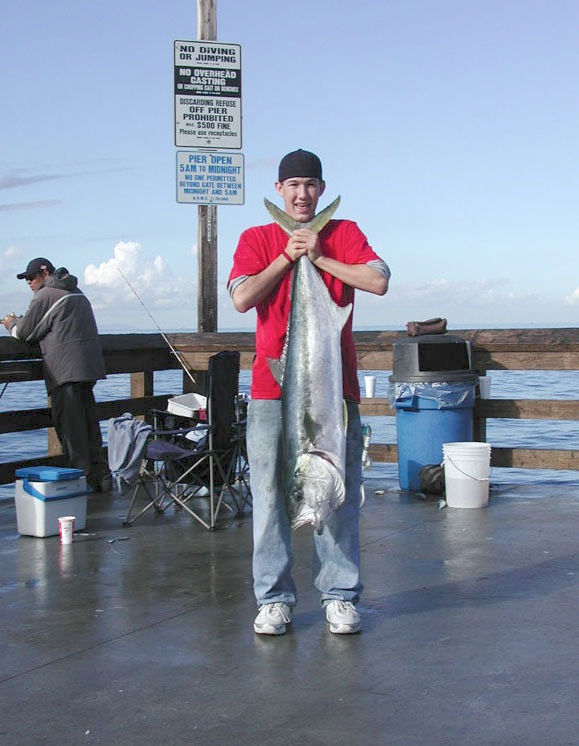 35-Pound yellowtail taken from the Balboa Pier by “Aaron”on November 1, 2003
 Yellowtail from Crystal Pier, August 2016
 Yellowtail caught at Crystal Pier on September 21, 2006 by Montre Somsukcharean; reported at 55 pounds. (Photo courtesy of Peggi Straker)
 48.5-pound yellowtail caught at the Crystal Pier in August 2012 by Tony Troncale
 40 Pound yellowtail taken by Angel Hernandez at the Crystal Pier on June 14, 2017
 42-pound yellowtail caught at Crystal Pier— October 2004
 34-Pound yellowtail caught at Crystal Pier in August of 2012 by “Hallman”
 A small “firecracker-size” yellowtail taken from the Redondo Sportfishing Pier in 2011
 34 Pound Yellowtail caught by Angel Hernandez at Crystal Pier, August 2016
 What remains of a 54″, guesstimated 40-pound yellowtail that was hooked and then hit by a sea lion at the Redondo Beach Pier in October 2008
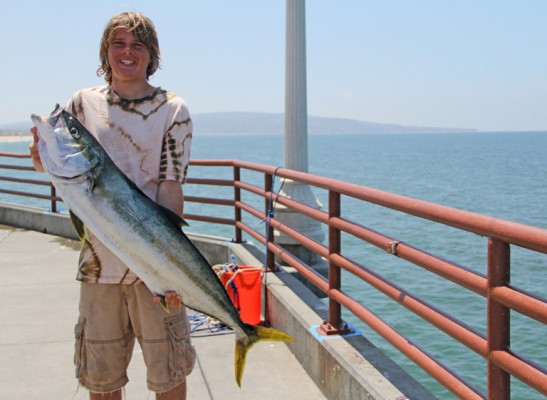 Yellowtail taken at the Manhattan Beach Pier in 2012
 46-Pound yellowtail taken at the Crystal Pier by Thomas Shinsato in August 2015

 Another small “rat-sized” yellowtail caught in Avalon. The fish was caught at the Green Pleasure Pier in September 2014 although the picture is at the Cabrillo Mole.
 A pretty-colored yellowtail taken at the Crystal Pier in August 2016
 Tony Troncale’s 48.5-pound yellowtail from Crystal Pier, August 2012
 Hard to believe, but a yellowtail taken from Monterey’s Wharf #2 in 2012.
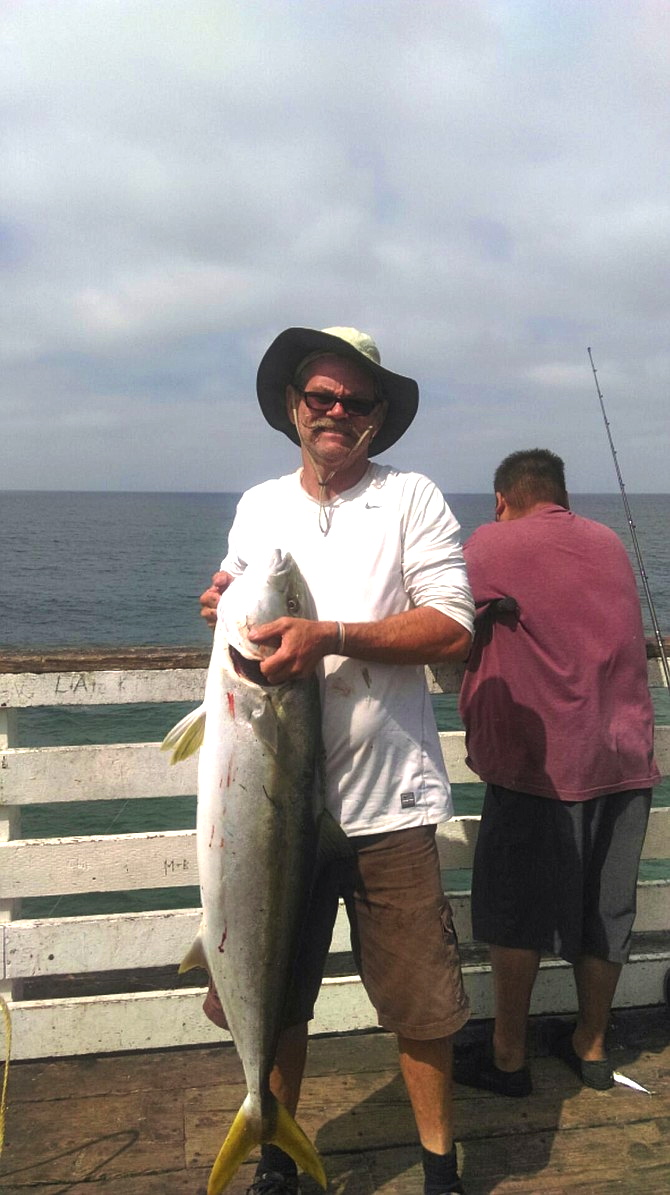 36-Pound yellowtail caught at Crystal Pier in August 2016 by Studman


 My very first yellowtail. Taken in San Diego many, many years ago.
 Aaron leaving the Balboa Pier with a 35-pound yellowtail in 2003